
Last updated September 23, 2026
Whole-system duct and dryer vent check with before-and-after photos - you see exactly what came out of your vents
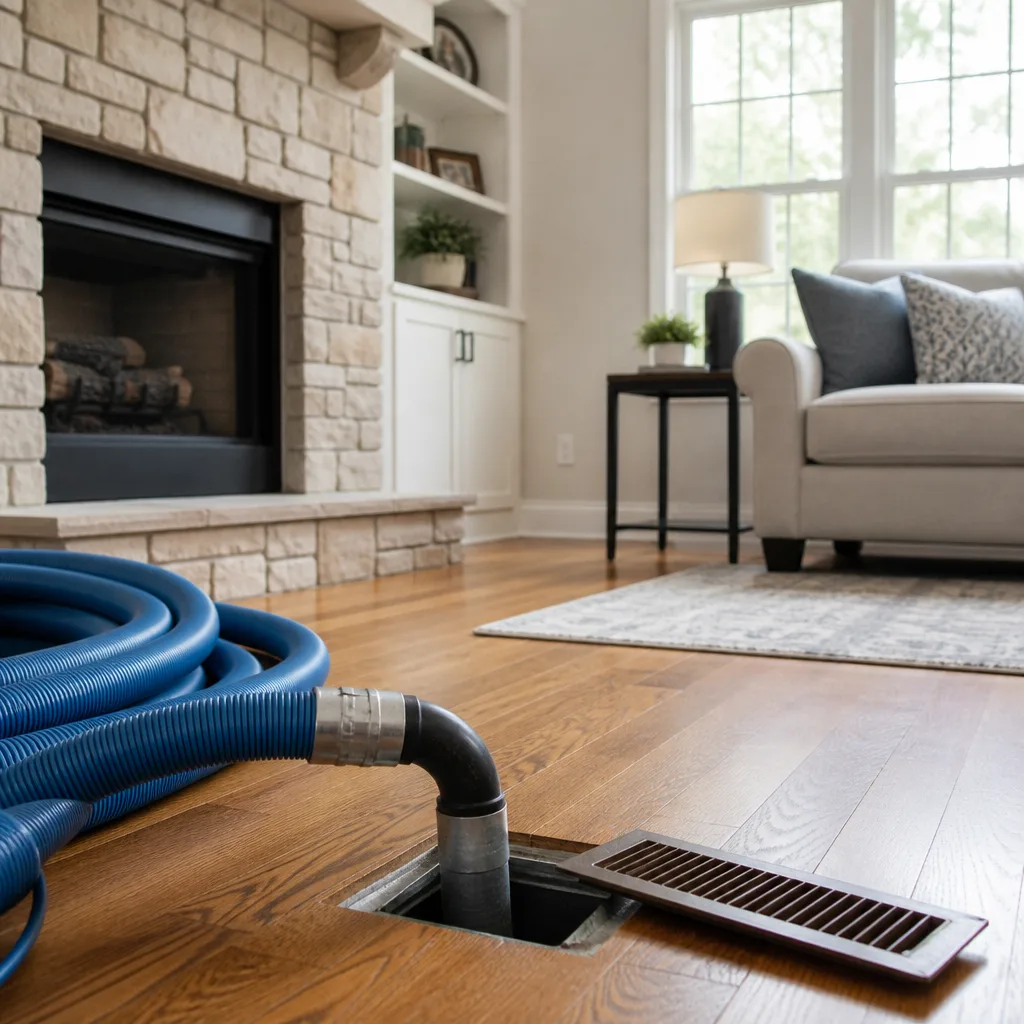
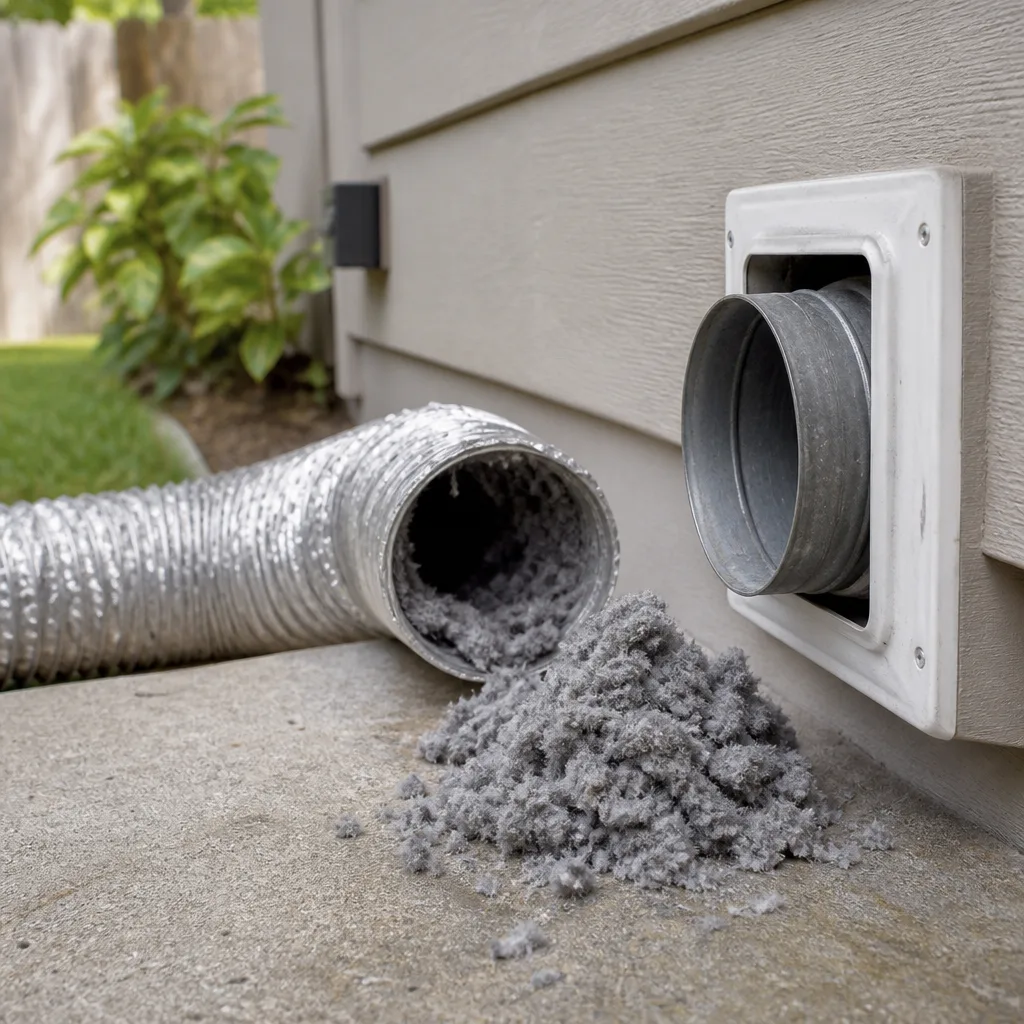
That "$99 whole-house special" is a bait ad - the real number appears once they are in your hallway, or the "clean" is a shop-vac at the register. We photograph the inside of your ducts before and after instead.
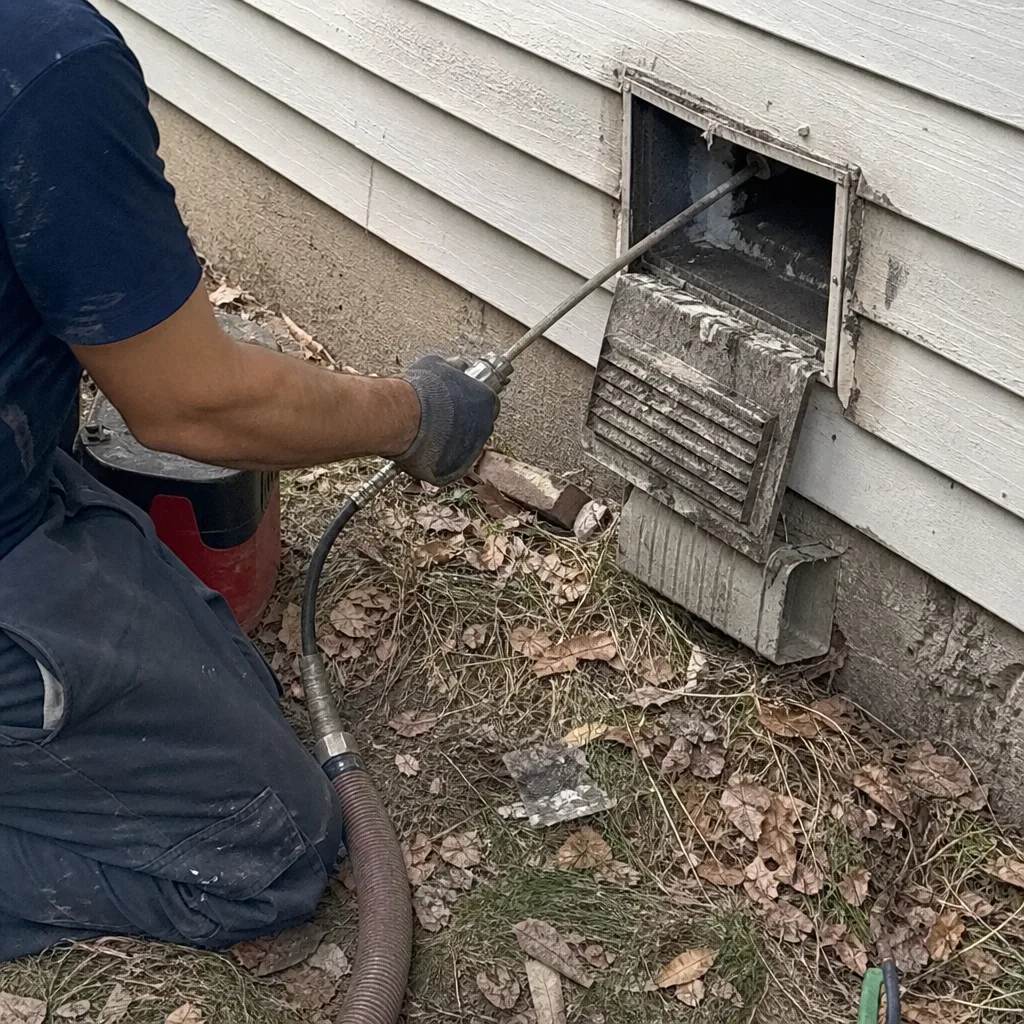 Before
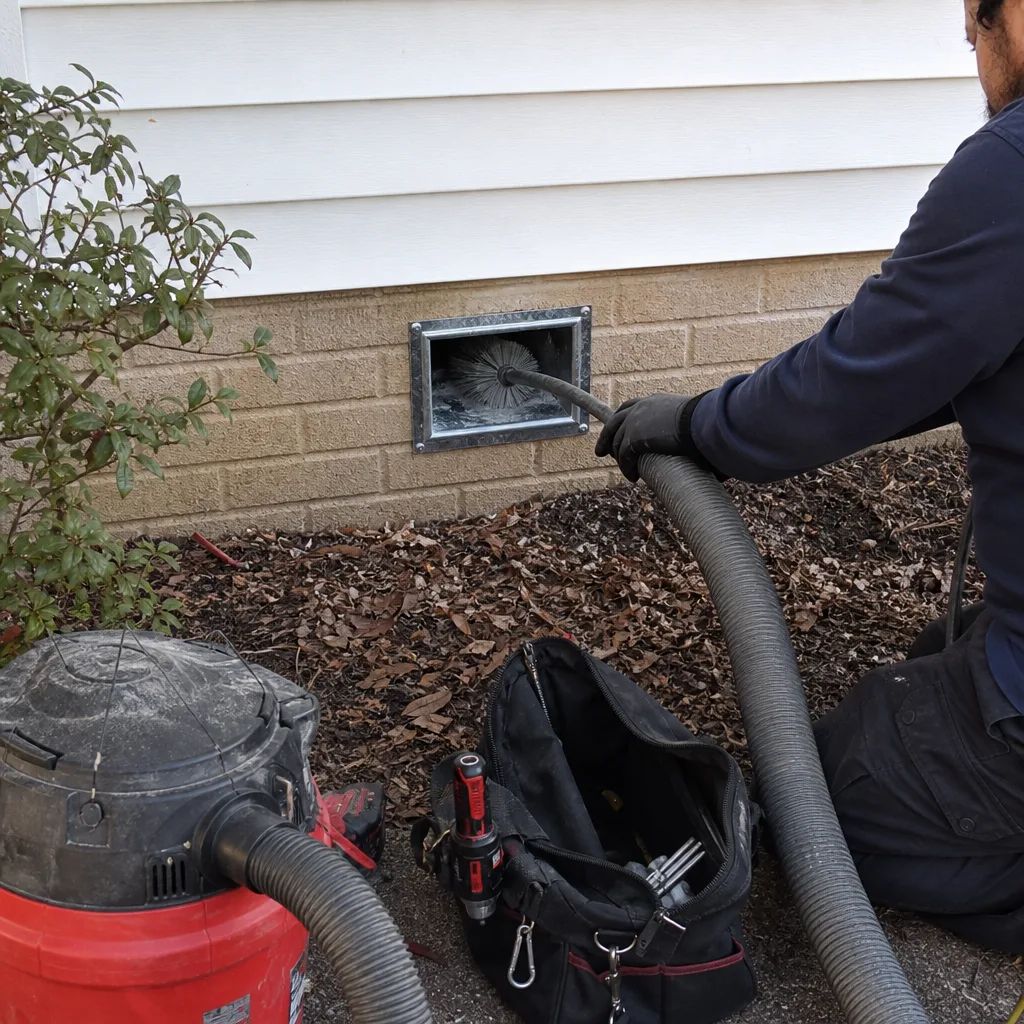 After
After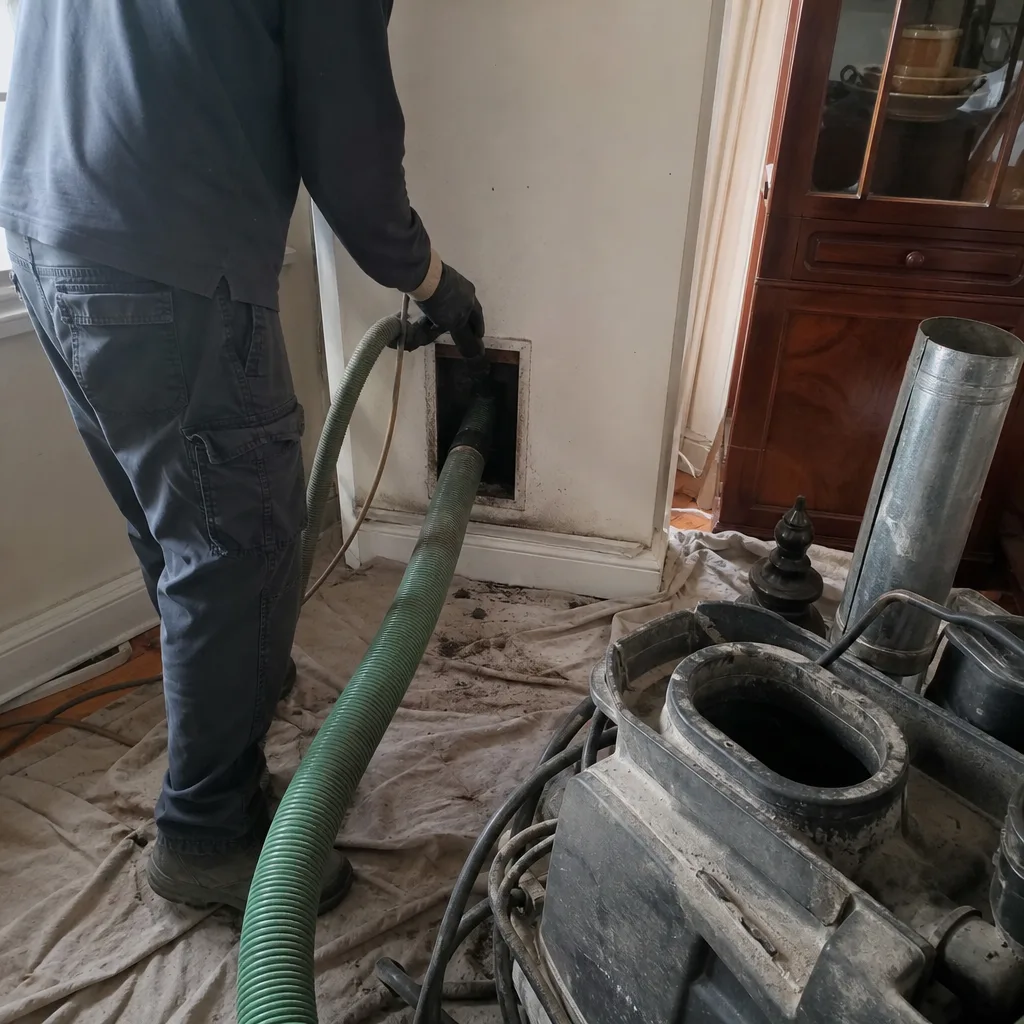 Before
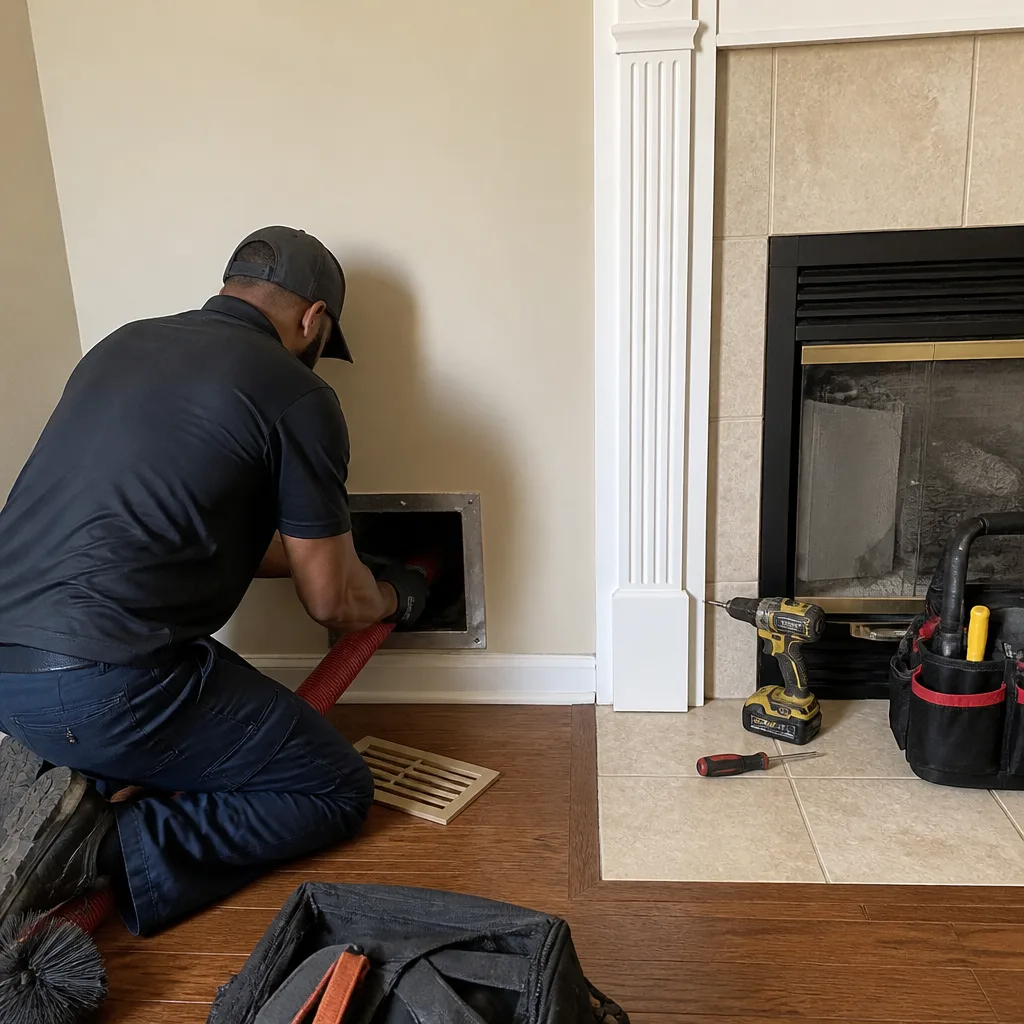 After
After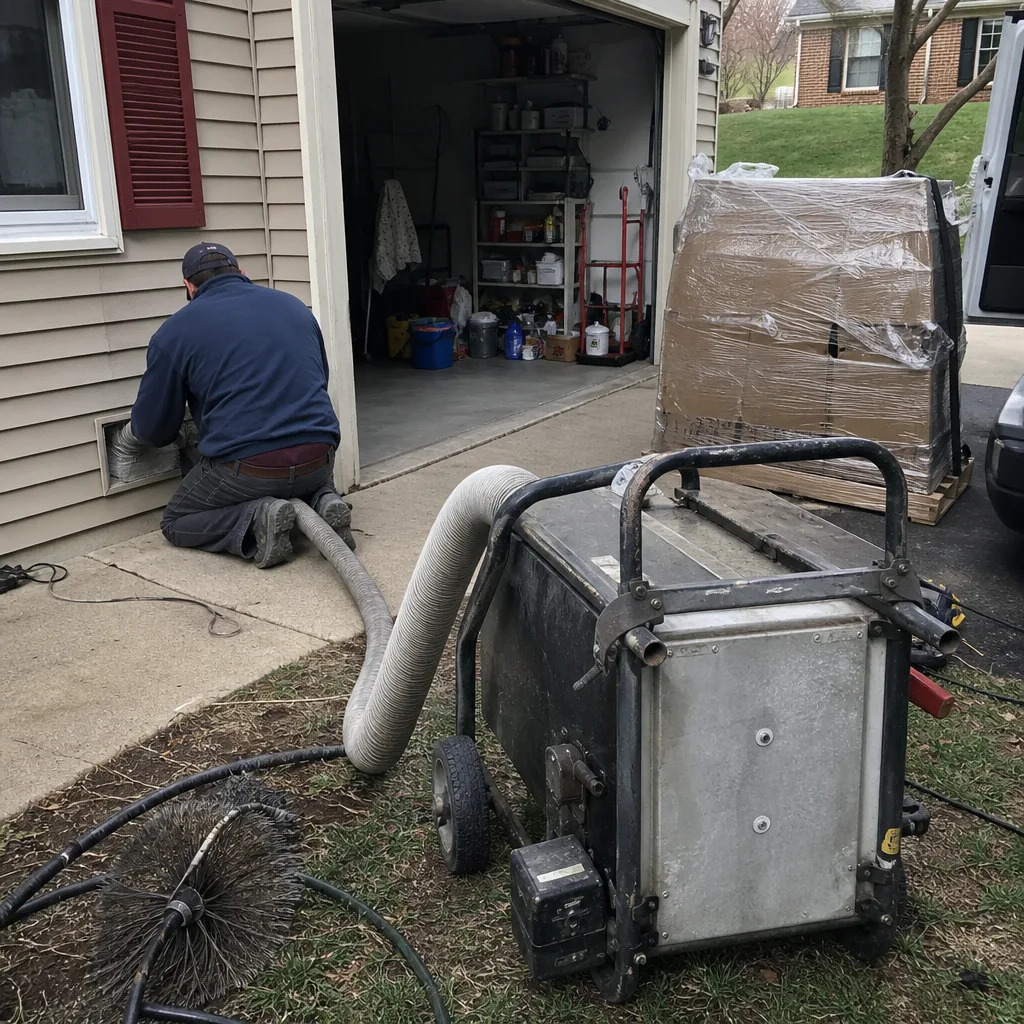 Before
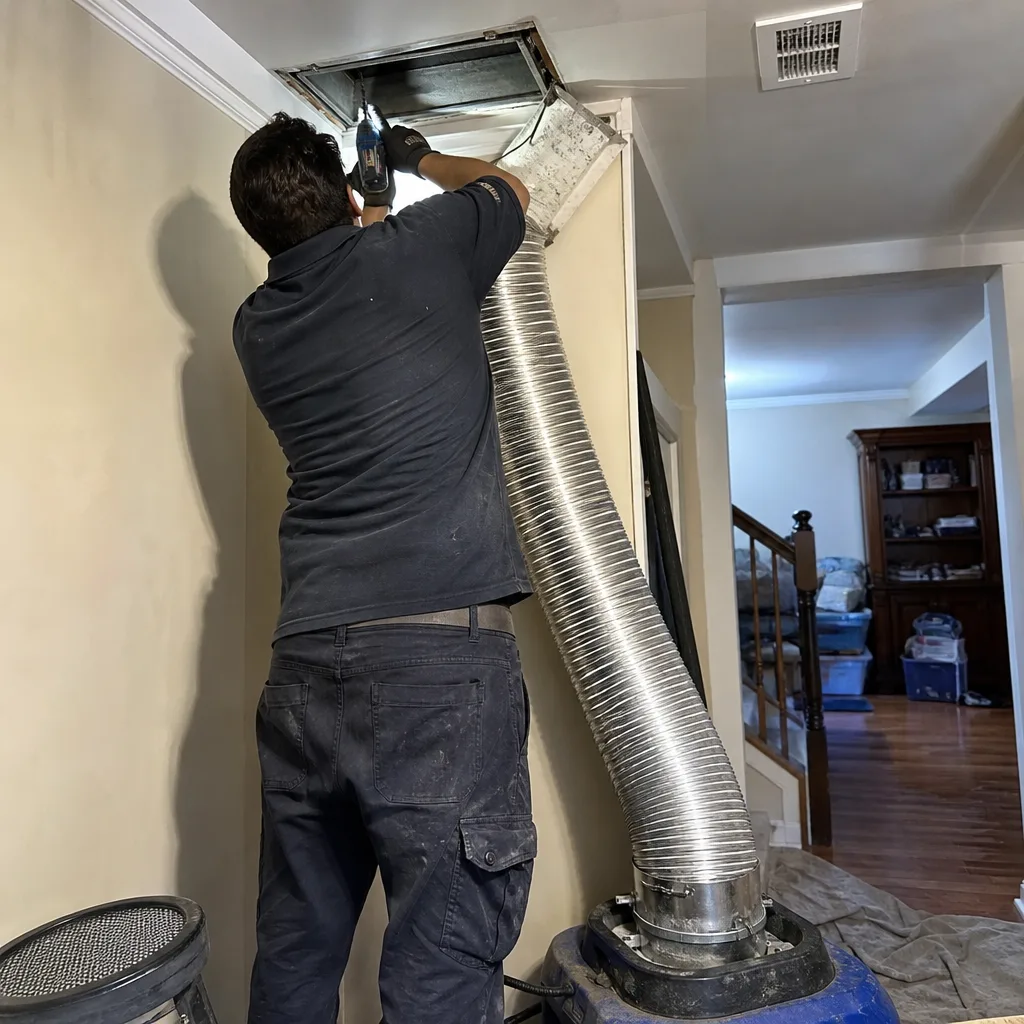 After
AfterDIY vs Professional Air Duct Cleaning: The Herndon Homeowner’s Decision Guide
A homeowner in Herndon with a rented drill-brush attachment and a shop-vac can clean a supply register and the first two feet of duct behind it. That is exactly what some professional services also clean, and exactly what leaves the rest of the system untouched. The real question is not whether you are handy enough to attempt duct cleaning, but whether your specific ductwork contains conditions that make partial cleaning worse than no cleaning at all. In this guide, we will walk you through what DIY methods can realistically accomplish, the four conditions that make professional equipment non-negotiable, and a five-question framework to determine which side of that threshold your Herndon home sits on before you spend money on either approach. For related reading, see our guide on How to Hire a Air Duct Cleaning Contractor in Herndon: A Step-by-Step Guide.
Quick Answer
DIY air duct cleaning works for surface debris on accessible registers and short, straight duct runs with no underlying contamination. Professional cleaning becomes necessary when your Herndon system shows biological growth, post-renovation debris, pest evidence, or flex duct runs longer than 10 feet that cannot be reached without negative-pressure extraction equipment. Most homeowners who attempt DIY first end up calling a professional for Air Duct Cleaning anyway, and disturbing debris without proper containment can occasionally make the professional job more expensive.
Table of Contents
- What DIY Air Duct Cleaning Can Realistically Accomplish
- Four Conditions That Make Professional Equipment Non-Negotiable
- Equipment Comparison: What the Tools Actually Do Differently
- The Hidden Cost of DIY Before Professional Cleaning
- The Five-Question Decision Framework for Herndon Homeowners
- What Professional Duct Cleaning Actually Includes in Herndon
- Common Mistakes to Avoid
- When to Call a Professional
- Frequently Asked Questions
- The Bottom Line
BeforeAfterWhat DIY Air Duct Cleaning Can Realistically Accomplish
Let us be specific about what a motivated homeowner can actually reach and clean inside a typical Herndon home built between 1985 and 2020.
A shop-vac with a hose extension and a brush attachment can remove loose dust and debris from:
- Floor and wall registers (the metal or plastic grille that covers the duct opening)
- The boot, which is the sheet-metal transition piece directly behind the register, typically 6 to 12 inches deep
- The first 18 to 24 inches of the duct run itself, if it is rigid metal and runs straight back from the boot without immediate elbows
- The return air grille and the filter housing area, which collects the most visible surface dust
That is the complete list. Past that point, several barriers appear that no amount of homeowner ingenuity overcomes without professional-grade equipment.
The first barrier is simple geometry. Most supply ducts in Herndon homes, particularly in neighborhoods like Franklin Farm and Dranesville, use a combination of rigid trunk lines with flex duct branches running to individual rooms. The flex duct, a spiral-wire frame wrapped in insulation and plastic, has an internal surface that traps debris in its ridges. A shop-vac hose pushed into flex duct compresses the duct wall against itself, sealing the hose inside a collapsed tube and accomplishing nothing.
The second barrier is the plenum, the large central chamber where conditioned air mixes before distribution. In a typical Herndon split-level or colonial, the plenum sits above the furnace or air handler, often in a basement utility room or closet. Reaching the plenum requires removing sealed panels, and disturbing debris there without negative-pressure containment risks blowing particulates throughout the home every time the system cycles.
The third barrier is what we call the elbow wall. Every duct system has multiple directional changes, typically 90-degree elbows that route air between floors or around structural members. A brush on a flexible rod can navigate one or two gentle bends, but tight elbows cause the rod to buckle or the brush to detach. We have retrieved more than one homeowner’s brush head from deep inside a duct run during subsequent professional cleanings.
So when does DIY make sense? Three specific scenarios:
- Maintenance between professional cleanings. If your ducts were professionally cleaned within the past three years and you want to reduce register dust accumulation, removing and vacuuming registers twice yearly is reasonable maintenance.
- New construction or recent renovation follow-up. If you had professional cleaning after construction but notice surface dust at registers during the first heating season, that dust is likely residual from construction settling, not systemic buildup.
- Specific register issues. A single register that blows noticeably more dust than others often indicates a localized problem, a detached boot seal or a gap in the duct run, that may be visible and addressable from the register opening.
In these cases, DIY produces genuine, measurable results. The mistake is assuming those results scale to the whole system.
Four Conditions That Make Professional Equipment Non-Negotiable
After twelve years and more than 52,000 homes, we have documented four conditions where partial or DIY cleaning is not merely insufficient but potentially counterproductive. If any of these conditions exist in your Herndon home, professional equipment and technique are required.
1. Biological Growth
Mold or mildew inside ductwork cannot be removed by brushing or vacuuming alone. The biological material adheres to metal and flex surfaces with a bond that mechanical agitation breaks loose but does not eliminate. Without antimicrobial treatment applied under controlled conditions, disturbed spores redistribute through the home. Worse, without identifying and correcting the moisture source, growth returns within one to two heating or cooling seasons.
In Herndon, biological growth correlates strongly with two local conditions: high summer humidity that overwhelms undersized condensate drainage, and winter temperature differentials that cause condensation on cold duct surfaces in unconditioned attic spaces. Homes near Sugarland Run or along the floodplain areas of Difficult Run see this more frequently due to higher ambient moisture.
2. Post-Renovation Construction Debris
Construction dust is not ordinary household dust. It contains drywall compound, joint compound, sawdust from treated lumber, insulation fragments, and silica particles from tile cutting. These materials are heavier than typical dust, abrasive to blower motors and heat exchangers, and often deposited in concentrated loads at duct elbows and plenum corners where airflow velocity drops.
A shop-vac lacks the airflow volume to lift construction debris from these low-velocity zones. Negative-pressure extraction systems, such as those from CleanRun Air Duct Cleaning Herndon home using Nikro and Abatement Technologies equipment, generate sufficient airflow to mobilize and capture this material.
3. Rodent or Pest Evidence
Droppings, nesting material, or carcasses require more than cleaning. They require containment protocols, personal protective equipment, and often coordination with pest control before cleaning begins. Disturbing rodent debris without HEPA containment and proper PPE creates genuine health hazards. We have documented cases in Herndon’s older neighborhoods, particularly near the historic district and along Woodland Park Drive, where homeowners attempted vacuuming after hearing rodents in ducts, only to spread contaminated particulate throughout the home.
4. Inaccessible Flex Duct Runs Longer Than 10 Feet
This is the most common condition in modern Herndon homes, and the one most homeowners underestimate. Flex duct runs of 15, 20, or 25 feet are standard in two-story colonials and townhomes built since 2000. These runs snake through wall cavities and floor trusses with multiple directional changes. Without a negative-pressure system that pulls debris backward through the entire run while a mechanical brush traverses it, cleaning is cosmetic at best.
The threshold is specific: flex duct longer than 10 feet with more than one directional change requires equipment that maintains consistent airflow velocity throughout the run. A shop-vac, even a high-horsepower model, cannot maintain that velocity past the first few feet.
Equipment Comparison: What the Tools Actually Do Differently
Understanding the equipment gap helps explain why DIY and professional cleaning produce different outcomes. Here is what each tool actually does, without exaggeration.
| Tool/System | What It Does | Typical DIY Access | Professional Application |
|---|---|---|---|
| Shop-vac (5-16 gallon) | Creates suction at the hose opening for surface debris collection | Readily available | Used as auxiliary tool for register cleaning, not primary duct cleaning |
| Drill-mounted brush kit | Rotates a nylon or wire brush at register opening to dislodge surface buildup | Rentable at hardware stores | Used by some professionals for register and boot cleaning only |
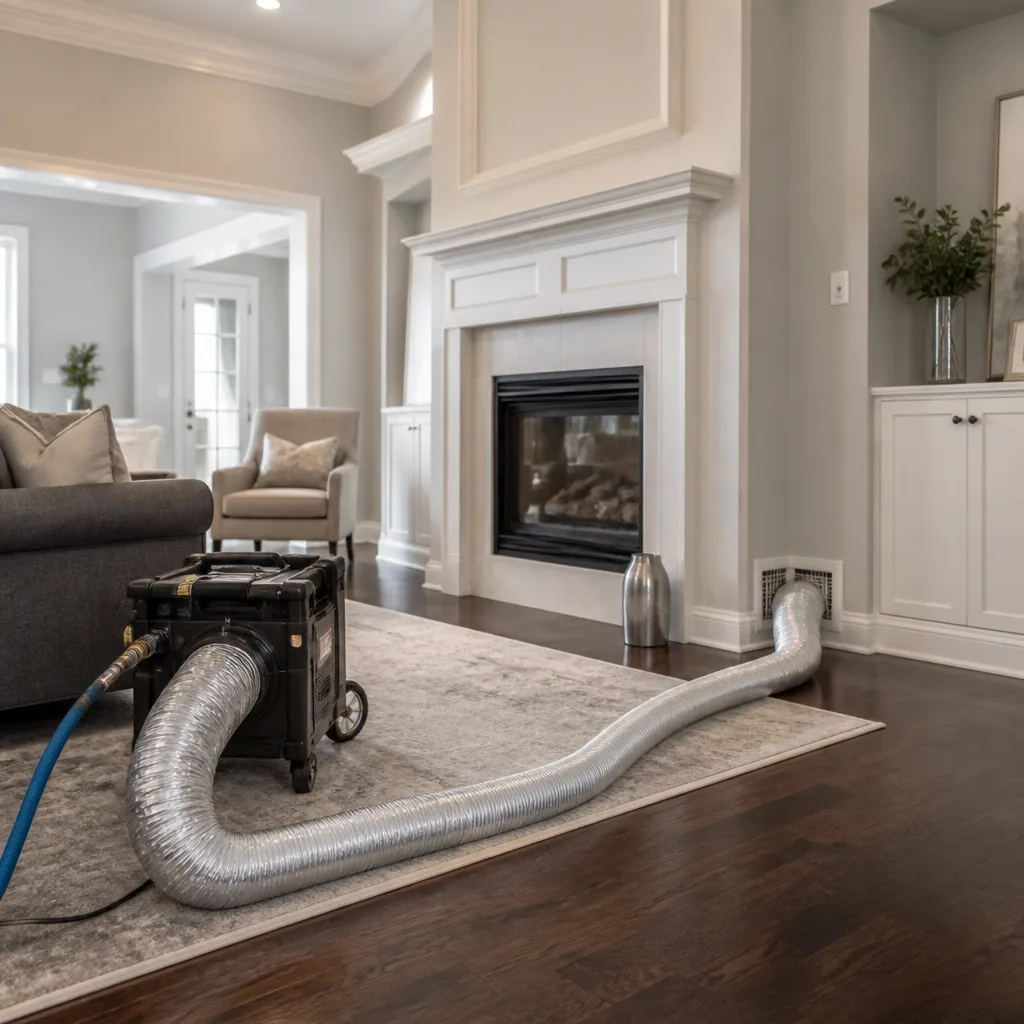
| Negative-pressure portable (Nikro, Abatement Technologies) | Creates sustained vacuum throughout entire duct system, typically 2,000-5,000 CFM, capturing mobilized debris at collection point | Not available for rental; requires training | Primary method for whole-system cleaning; contains debris during agitation |
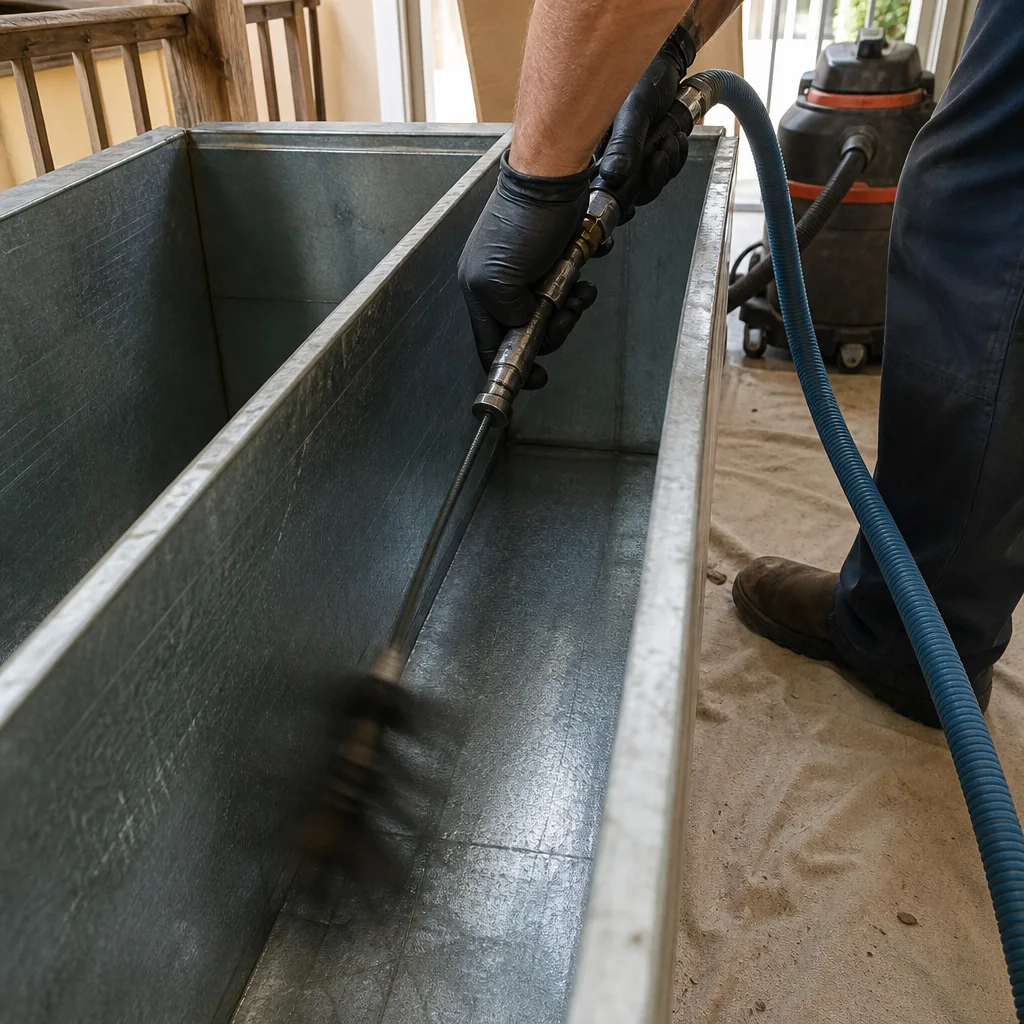
| Rotary brush system (Rotobrush) | Rotating brush traverses duct run while vacuum port immediately behind brush captures dislodged material | Some rental versions exist; limited reach and power | Professional units have variable speed, camera integration, and sufficient torque for full duct runs |
| Contact vacuuming with HEPA filtration | High-efficiency particulate capture for sensitive environments or post-remediation | HEPA shop-vacs available; limited airflow | Required for medical-grade or allergy-sensitive cleaning protocols |
The critical difference is containment. A shop-vac collects what its hose opening touches. A negative-pressure system creates airflow throughout the entire duct network, so debris dislodged at any point is carried to the collection point rather than settling elsewhere in the system or blowing into occupied space.
We use equipment from Nikro, Abatement Technologies, and Rotobrush because these manufacturers publish specifications that customers can verify independently. The Honeywell and Aprilaire products in our inventory are primarily air quality monitoring and filtration components that help assess whether cleaning has produced measurable improvement in particulate levels.
The Hidden Cost of DIY Before Professional Cleaning
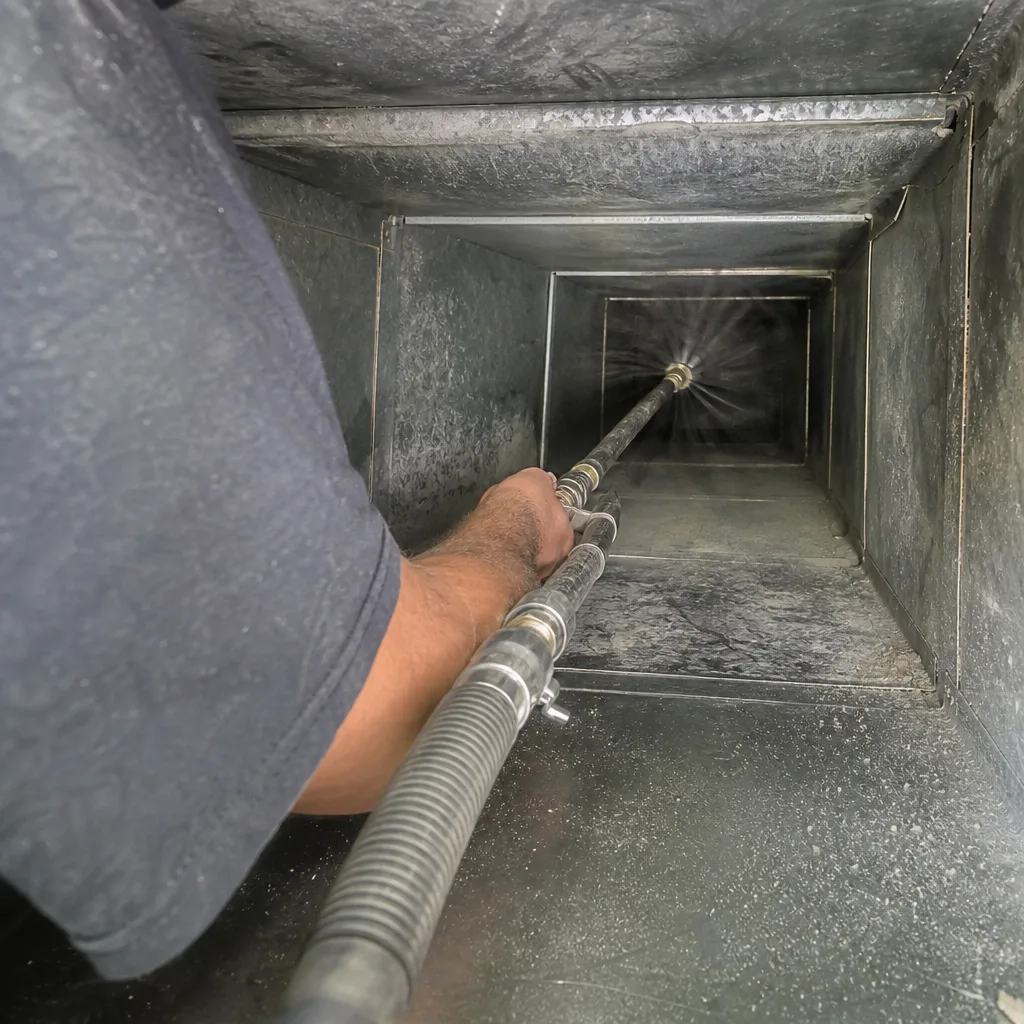
This is the scenario we see most often, and the one least discussed in DIY guides. A homeowner rents equipment, spends a Saturday cleaning registers and reachable duct sections, then calls us two months later because dust output has increased or a musty smell persists.
Here is what has typically happened.
The DIY attempt dislodged debris from surfaces it could reach, breaking loose material that then settled in deeper, less accessible portions of the system. Without negative pressure to capture that debris, it simply relocated. The register looks cleaner. The duct run behind it may be worse.
In some cases, the disturbance also compresses debris in flex duct ridges, packing it more tightly against the duct wall. Professional rotary brushing then requires more passes, more time, and occasionally sectional access through the duct wall if the packed material cannot be mobilized through standard register openings.
The cost implication is straightforward. A standard whole-system cleaning in Herndon typically ranges from $450 to $850 for homes under 3,500 square feet, depending on duct configuration and contamination level. When we encounter a system that has been partially disturbed without proper containment, the job occasionally requires additional time or sectional access, pushing the upper end of that range. Not always, but enough that we mention it during the initial scope review.
The more significant cost is the repeated disruption: scheduling the DIY attempt, the rental expense, the time spent, then scheduling the professional service that should have been the first call. Our written pricing under Haven Standard Clause 1 means the estimate we provide before work starts is the price you pay, but we cannot reduce the price because a previous DIY attempt made the job more complex.
The Five-Question Decision Framework for Herndon Homeowners
Answer these five questions before renting equipment or calling any service. Your answers determine which side of the threshold your system occupies.
- When I remove a floor register and shine a flashlight into the duct, can I see the first elbow or directional change within arm’s reach?
Yes: DIY may produce meaningful results for that run.
No: Professional equipment is required to reach and clean the full run. - Have I noticed any musty odor, visible discoloration on registers, or allergy symptoms that worsen when the HVAC runs?
Yes: Biological growth is possible. Professional assessment and treatment are indicated.
No: Continue to question 3. - Was my home built or renovated within the past two years, or has there been any drywall work, flooring replacement, or major painting?
Yes: Construction debris likely present. Professional negative-pressure cleaning is the appropriate response.
No: Continue to question 4. - Have I heard scratching, found droppings near registers, or noticed nesting material?
Yes: Pest evidence requires professional containment protocols. Do not vacuum or disturb without proper PPE and technique.
No: Continue to question 5. - Are my duct runs primarily rigid metal with straight paths, or flex duct with multiple bends longer than 10 feet?
Rigid metal, straight paths: DIY may be worth attempting for maintenance cleaning.
Flex duct, multiple bends, longer runs: Professional rotary brush and negative-pressure system required for meaningful results.
If you answered yes to questions 2, 3, or 4, professional service is indicated regardless of other answers. These conditions involve health hazards or equipment requirements that DIY cannot address. For year-round maintenance tips, see our Seasonal Air Duct Cleaning Care for Herndon: Year-Round Homeowner’s Guide.
For Herndon homeowners in neighborhoods like McNair Farms, Worldgate, or the townhomes near Dulles Airport, question 5 is often the deciding factor. The construction methods in these areas favor extensive flex duct runs that place whole-system cleaning beyond DIY capability.
What Professional Duct Cleaning Actually Includes in Herndon
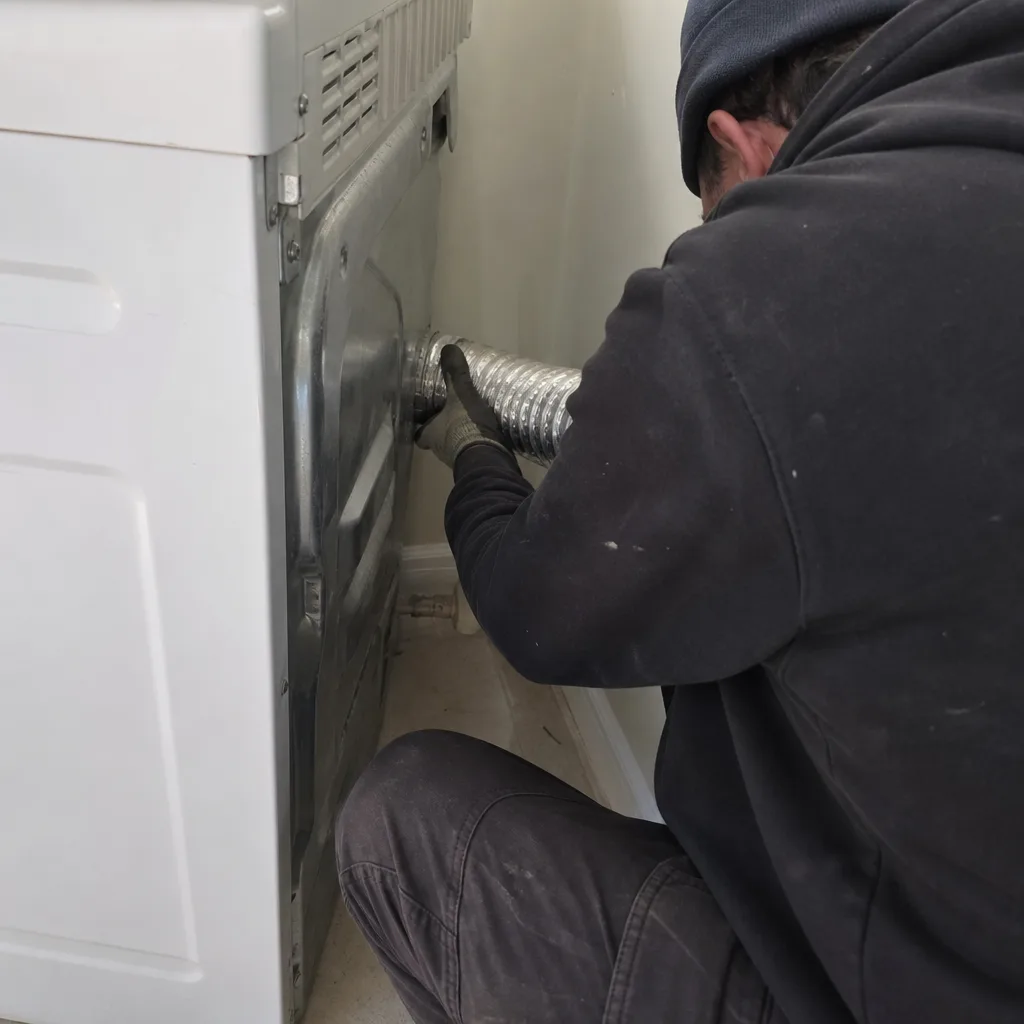
Understanding what professional service entails helps evaluate whether the cost is justified for your specific situation. Here is what a complete cleaning includes when performed to industry standards, and what Air Duct Cleaning in Herndon from CleanRun specifically delivers.
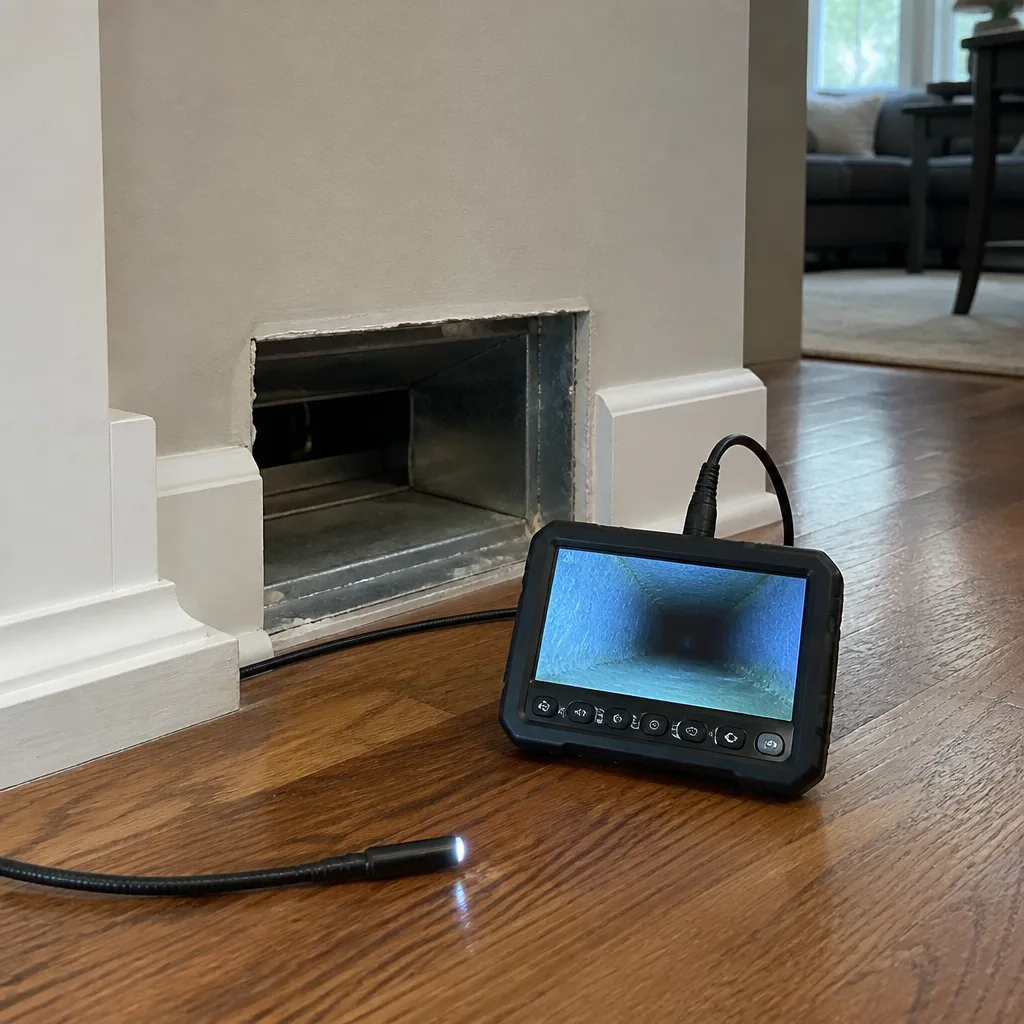
Pre-cleaning documentation. We photograph the interior of every duct run before work begins. This is not marketing photography. It is a dated, geotagged record that shows what the system contained. Customers receive this as part of their job record.
System inspection. We examine the blower assembly, evaporator coil (if accessible), heat exchanger, and plenum for debris accumulation and component condition. This identifies whether cleaning alone is sufficient or whether repairs or additional services are indicated.
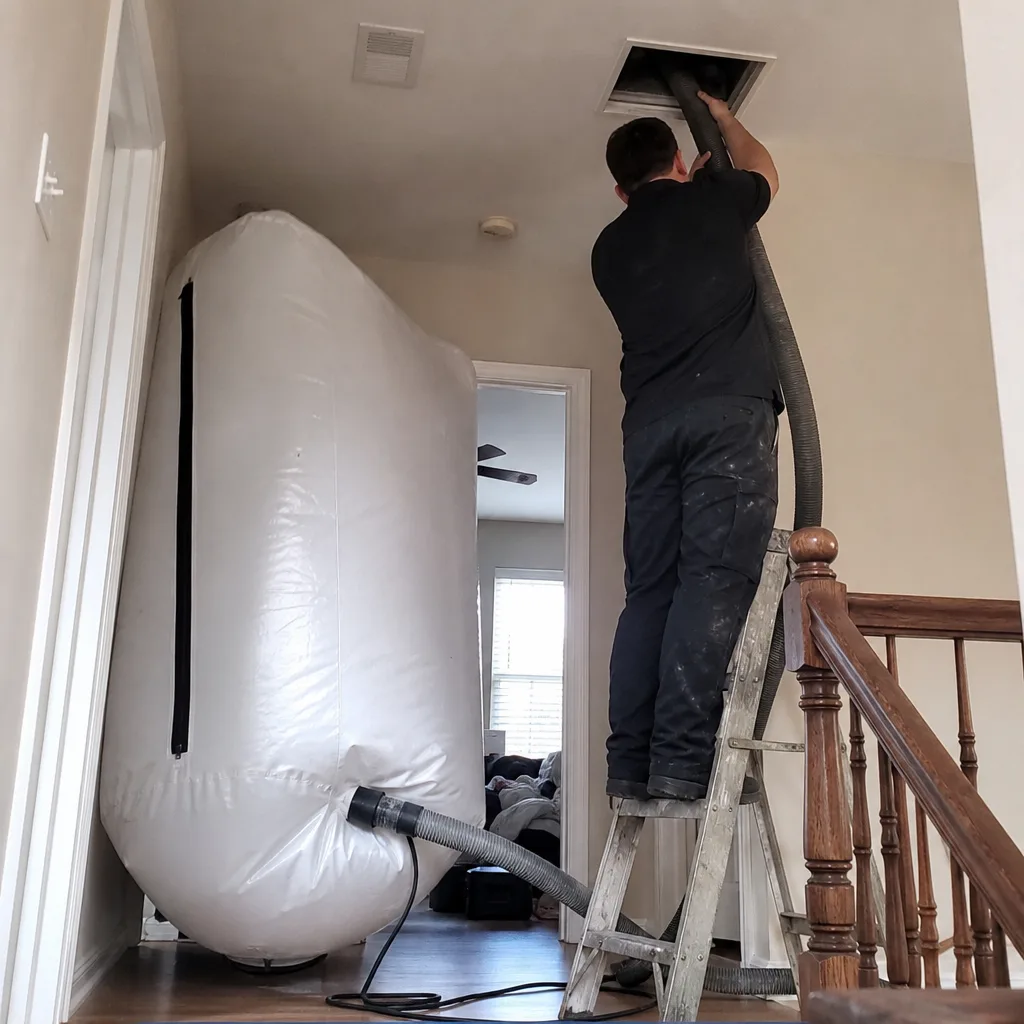
Negative-pressure extraction with mechanical agitation. The collection unit attaches to the duct system near the air handler, creating sustained vacuum throughout the network. Rotary brushes or contact vacuuming tools traverse each duct run, dislodging debris that the negative pressure carries to the collection filter.
Component cleaning. Blower wheels, secondary heat exchangers, and accessible coils are cleaned according to manufacturer specifications. These components affect airflow and efficiency as much as ductwork itself.
Post-cleaning documentation. We photograph the same duct runs after cleaning. The before-and-after comparison is included in the customer deliverables. This documented photo record has been standard on every CleanRun job since 2013.
Written scope and pricing. Under Haven Standard Clause 1, the price is written and agreed before work begins. No per-vent add-ons, no post-inspection upsells. The price covers the system, not a count of registers.
365-Day Done Right Promise. If the work is not right, we make it right. This is a written guarantee included with every job record, not a policy subject to manager discretion.
Typical whole-system cleaning in Herndon, for a single-family home between 1,800 and 3,200 square feet, ranges from $450 to $850. Homes with multiple HVAC systems, extensive flex duct, or contamination requiring additional treatment may exceed this range. The written estimate specifies exactly what is included and what conditions, if any, might affect final scope.
Common Mistakes to Avoid
- Assuming register cleaning equals duct cleaning. Cleaning the visible grille improves appearance but does not address the duct run, plenum, or blower assembly where systemic debris accumulates.
- Using a standard vacuum without HEPA filtration. Non-HEPA vacuums exhaust fine particulate through the motor exhaust, often redistributing it into the same room. This is particularly counterproductive in Herndon’s tighter modern homes with limited natural ventilation.
- Ignoring the return side. The return duct system, which pulls air back to the air handler, typically contains more debris than supply ducts because it is unfiltered past the return grille. DIY efforts often focus entirely on supply registers.
- Disturbing mold without containment. We have documented cases in Herndon homes near the Reston border where homeowners scrubbed visible mold from registers with bleach, dispersing spores throughout the home. Bleach on porous or semi-porous duct surfaces also creates moisture that can worsen growth.
- Renting equipment without verifying reach specifications. Rental brush kits typically specify maximum reach, often 12 to 15 feet. Homeowners rarely measure their duct runs before renting, discovering too late that the tool cannot navigate to the plenum or past the first elbow.
- Falling for per-vent pricing confusion. Some services advertise low base rates with per-vent add-ons, producing invoices far above initial quotes. CleanRun’s written pricing under Haven Standard Clause 1 specifies one flat price per system. If you are comparing quotes, verify whether the price covers the complete system or only a portion.
When to Call a Professional
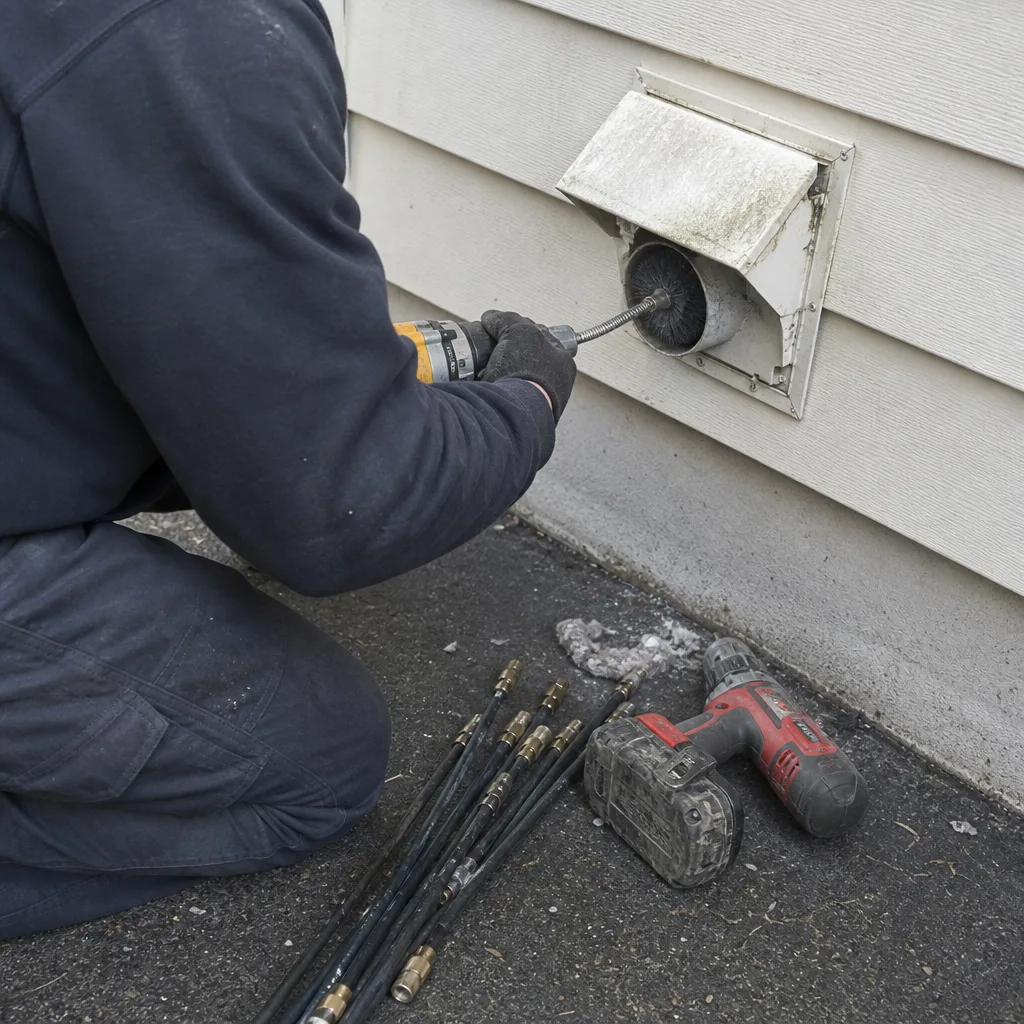
Call a professional when any of the four non-negotiable conditions are present: biological growth, post-renovation debris, pest evidence, or inaccessible flex duct runs longer than 10 feet. Also call when your five-question assessment indicates professional equipment is required, or when a DIY attempt has produced visible register improvement but persistent system-wide issues.
CleanRun Air Duct Cleaning Herndon offers free estimates in Herndon. We will scope your system, show you what the camera reveals inside your ductwork, and provide a written price before any work begins. Call (571) 520-6317 to schedule. If you have a written estimate from another provider, we offer a Free Second Opinion at no cost, with our written number placed next to theirs for direct comparison. Explore our more guides & resources for additional homeowner information.
All technicians are background-checked and uniformed under Haven Standard Clause 3: Verified Crews. You will receive the technician’s name before arrival, and every job concludes with a documented photo record of every duct run, delivered as part of your standard job record.
Frequently Asked Questions
Whole-system air duct cleaning in Herndon typically costs between $450 and $850 for single-family homes under 3,500 square feet, with one flat price per system agreed in writing before work starts. Homes with multiple HVAC systems, extensive flex duct, or conditions requiring additional treatment may fall outside this range. Call (571) 520-6317 for a written estimate specific to your home.
Low advertised prices, particularly $79 to $149 offers, typically cover only register wiping and brief vacuuming at duct openings, not whole-system cleaning. The final invoice often includes per-vent add-ons, “deep cleaning” surcharges, and mandatory sanitizing treatments that bring the total to or above standard professional pricing. CleanRun does not use per-vent pricing or teaser rates. The written estimate under Haven Standard Clause 1 covers the complete system scope.
Request before-and-after documentation of the interior of your duct runs. CleanRun includes a documented photo record on every visit, showing the interior of every duct run before and after cleaning, as part of the standard job deliverable since 2013. If a provider cannot or will not show you internal duct photography, you cannot verify what was cleaned.
Most Herndon homes benefit from professional cleaning every three to five years. Homes with pets, recent renovations, or residents with respiratory sensitivities may need more frequent service. The specific interval depends on what the ductwork contains, not on calendar time alone. A camera inspection reveals whether cleaning is indicated.
Dryer vent cleaning is a separate service with different access requirements. Short, straight dryer vents with exterior terminations at ground level can sometimes be cleaned by homeowners with appropriate brushes. Longer runs, multiple elbows, or roof terminations require professional equipment. Dryer Vent Cleaning in Herndon from CleanRun addresses these configurations with specialized tools and includes airflow verification to confirm proper exhaust performance.
Yes. Herndon’s humid summers and temperature swings between seasons create condensation cycles in ductwork, particularly in unconditioned attic spaces. This moisture can support biological growth and accelerate debris adhesion. Homes near water features or in lower-elevation areas of Fairfax County may experience these effects more pronouncedly. The local climate does not change the cleaning interval for all homes, but it does mean that moisture-related conditions should be assessed during any duct inspection.
The Bottom Line
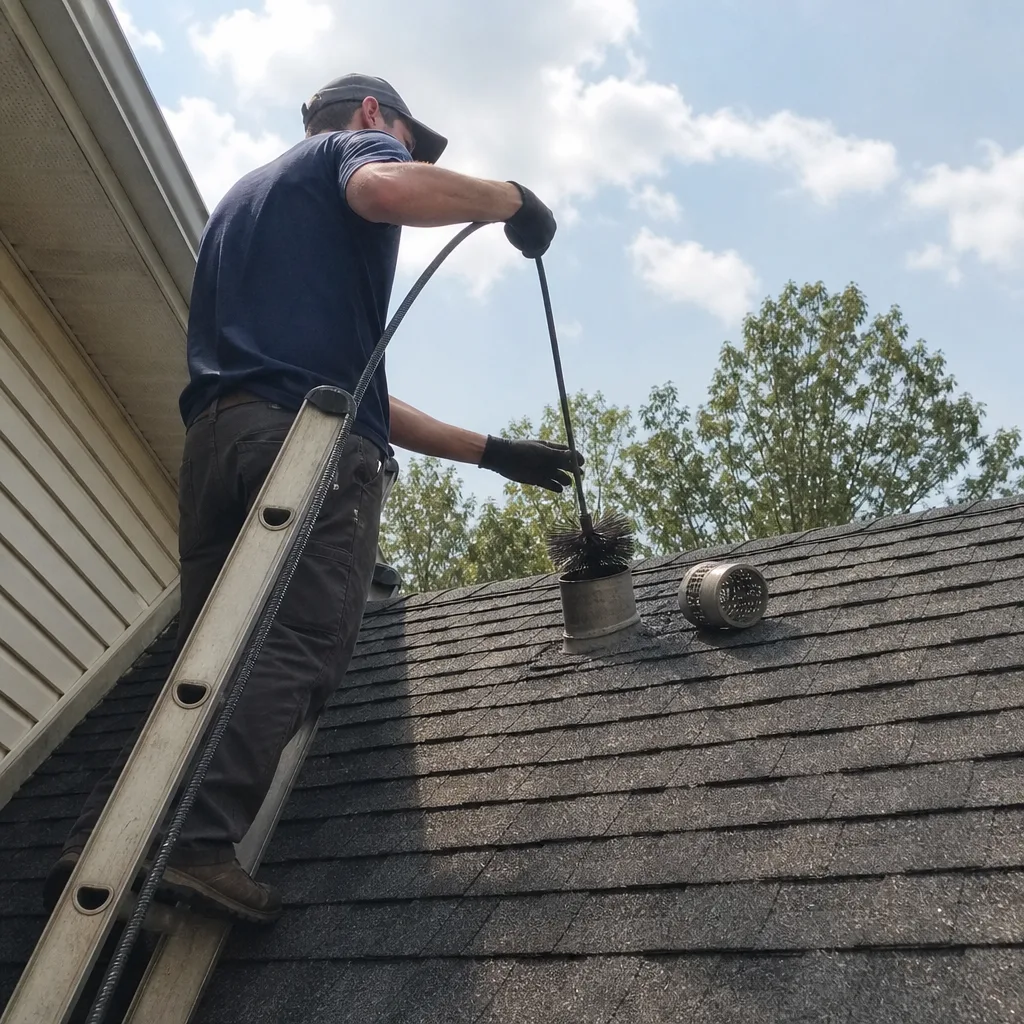
The DIY versus professional duct cleaning question has a specific, answerable threshold. A homeowner with basic tools can maintain registers and address surface dust between professional services. But biological growth, construction debris, pest evidence, and long flex duct runs require equipment and technique that rental tools cannot replicate. The five-question framework lets any Herndon homeowner determine which side of that threshold their system occupies before spending money. The most expensive choice is often the DIY attempt that disturbs debris without containing it, making the eventual professional service more complex than it needed to be. CleanRun has documented this pattern across thousands of Herndon homes since 2013. The written price, the photo record, and the 365-Day Done Right Promise exist so that homeowners know exactly what they are paying for and can verify exactly what was delivered.
Written by Tomas Reyes, Owner at CleanRun Air Duct Cleaning Herndon, serving Herndon since 2013.