
Last updated September 23, 2026
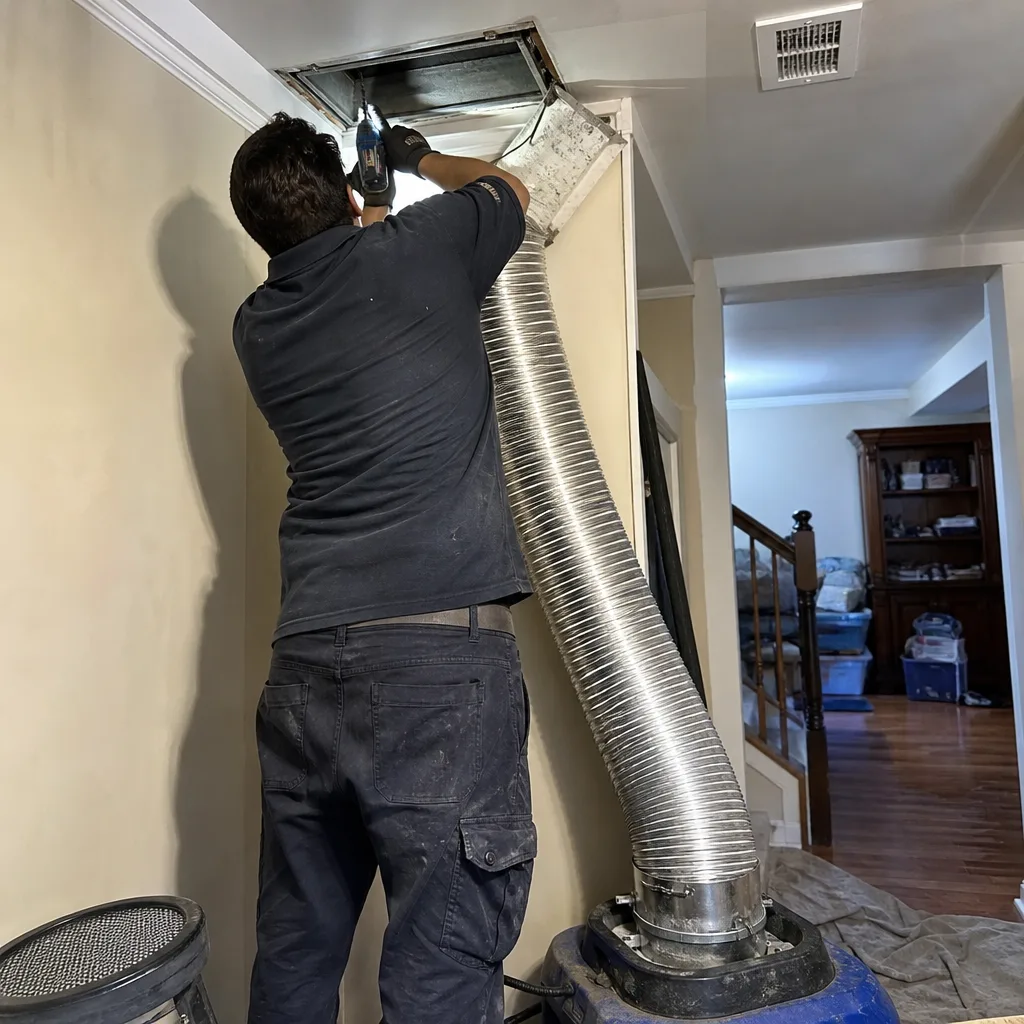
Whole-system duct and dryer vent check with before-and-after photos - you see exactly what came out of your vents
That "$99 whole-house special" is a bait ad - the real number appears once they are in your hallway, or the "clean" is a shop-vac at the register. We photograph the inside of your ducts before and after instead.

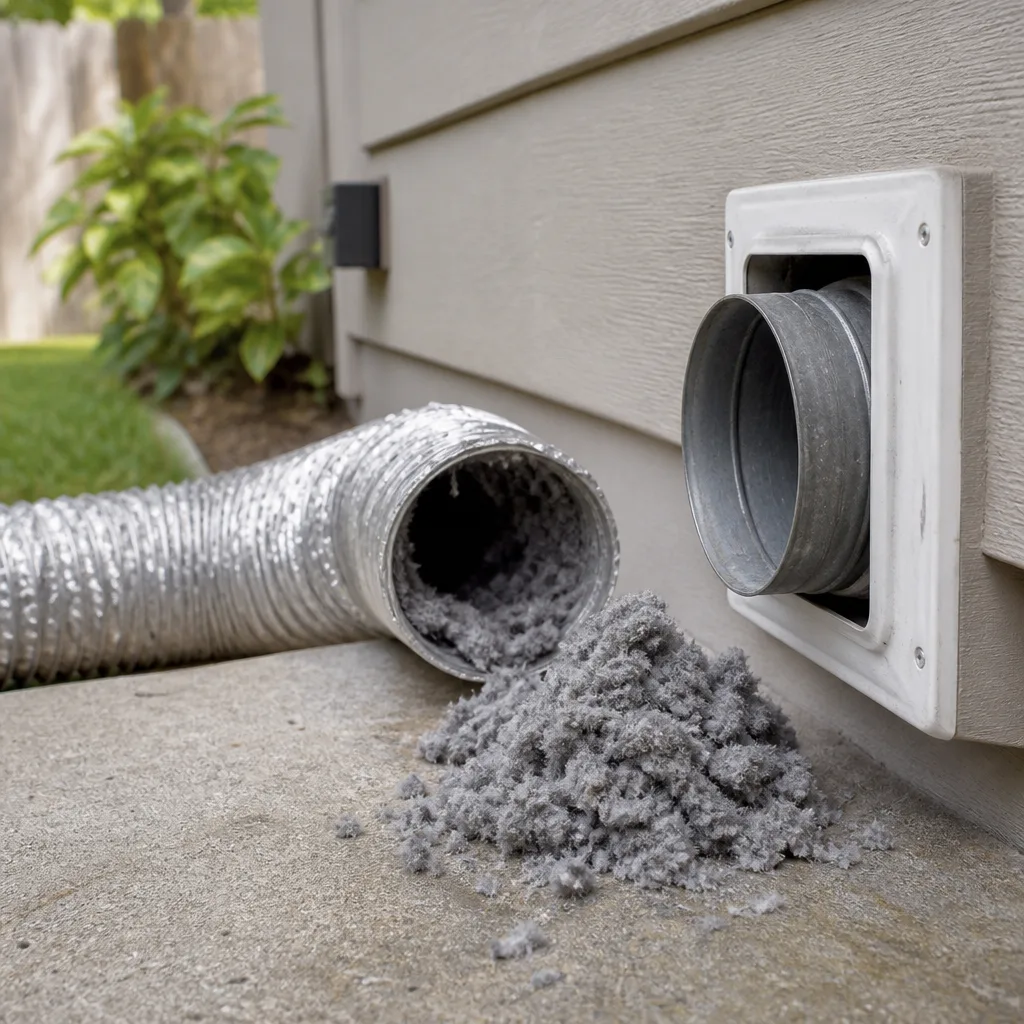
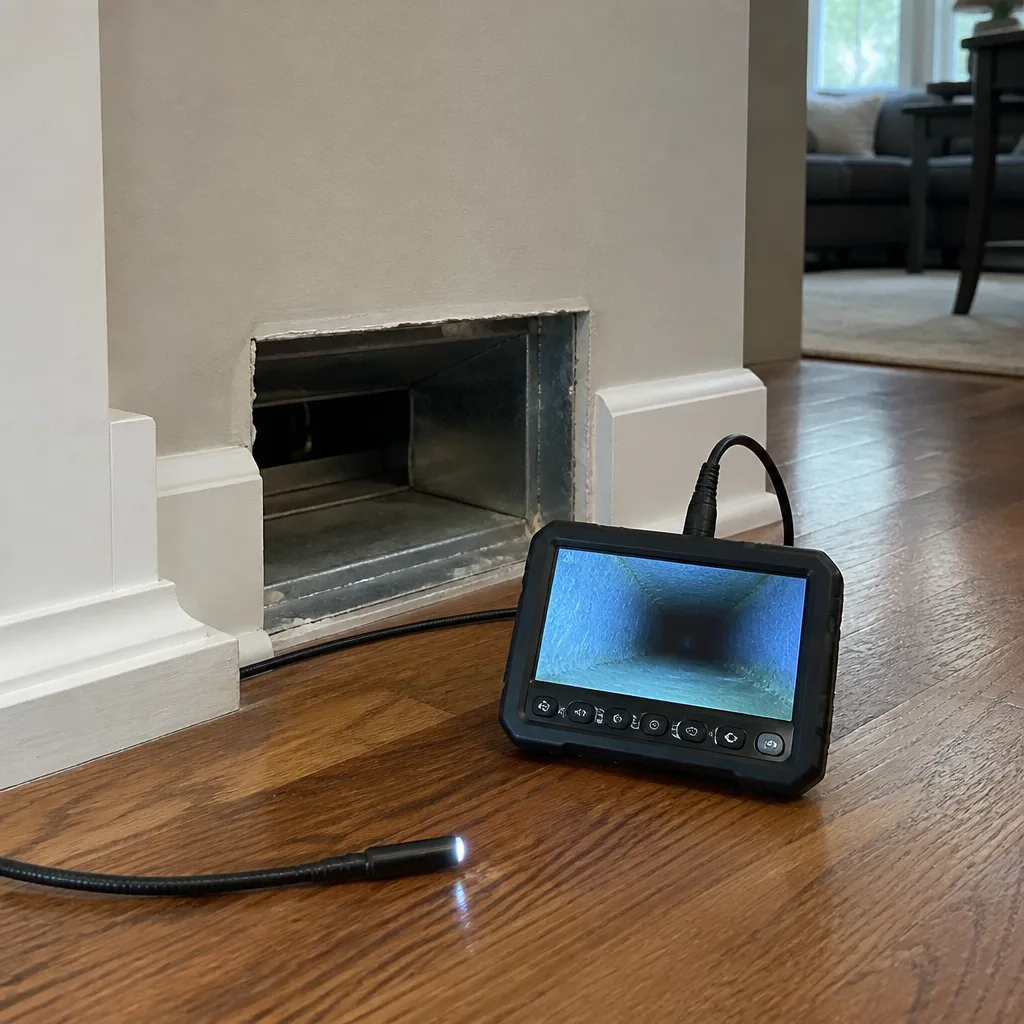
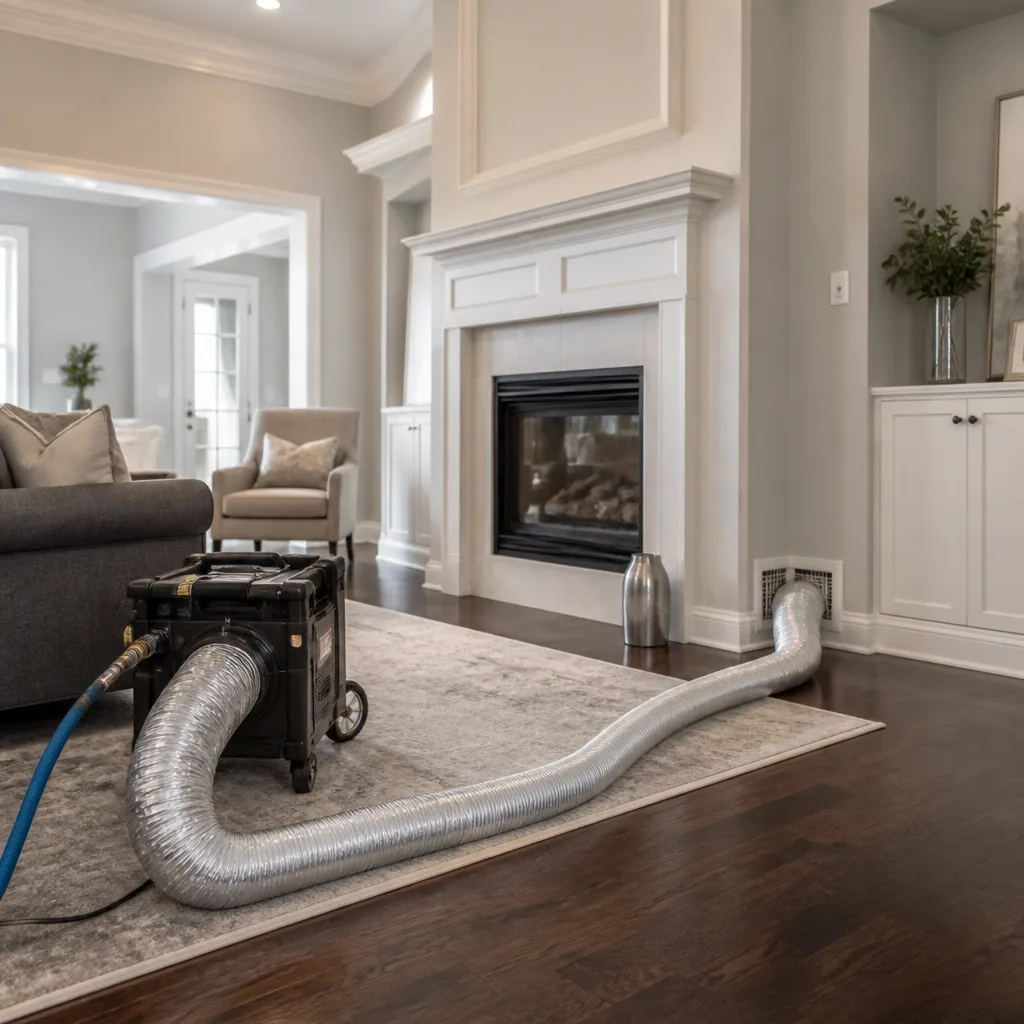
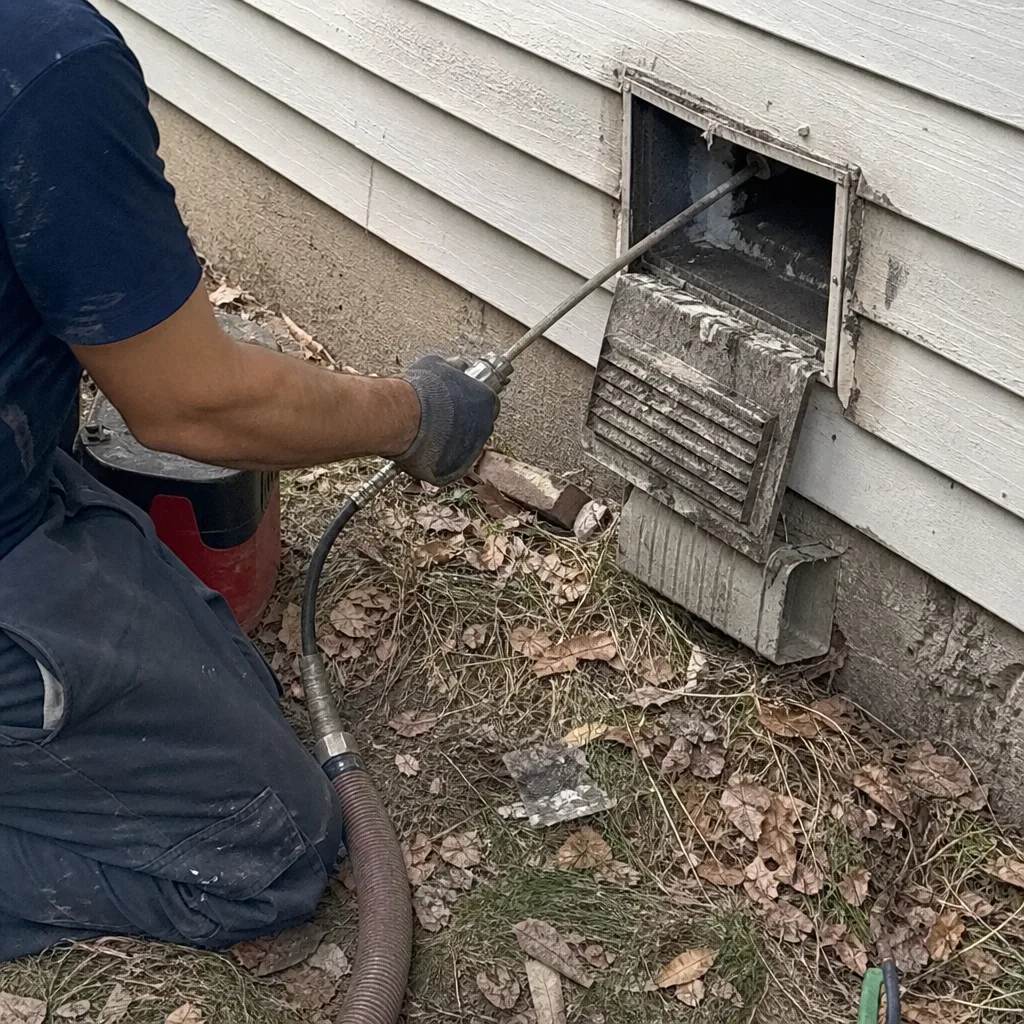 Before
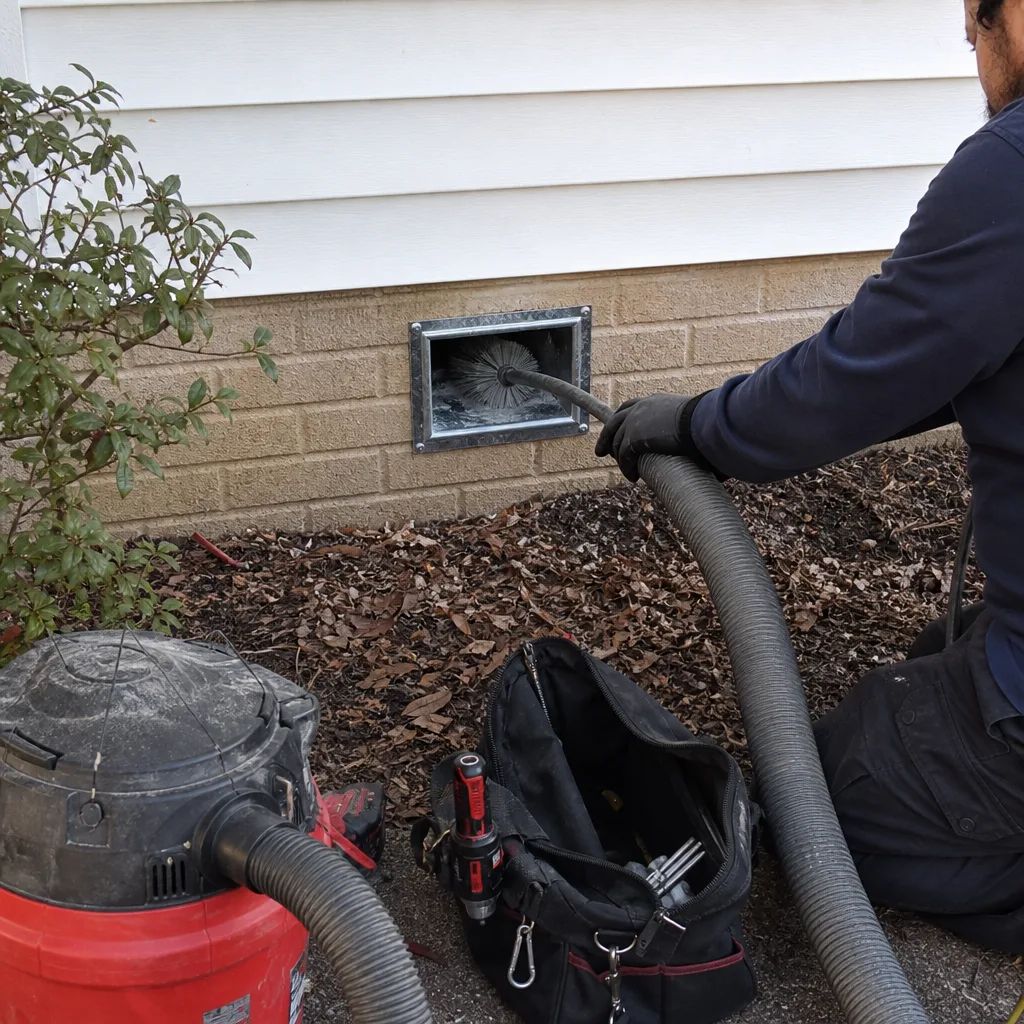 After
After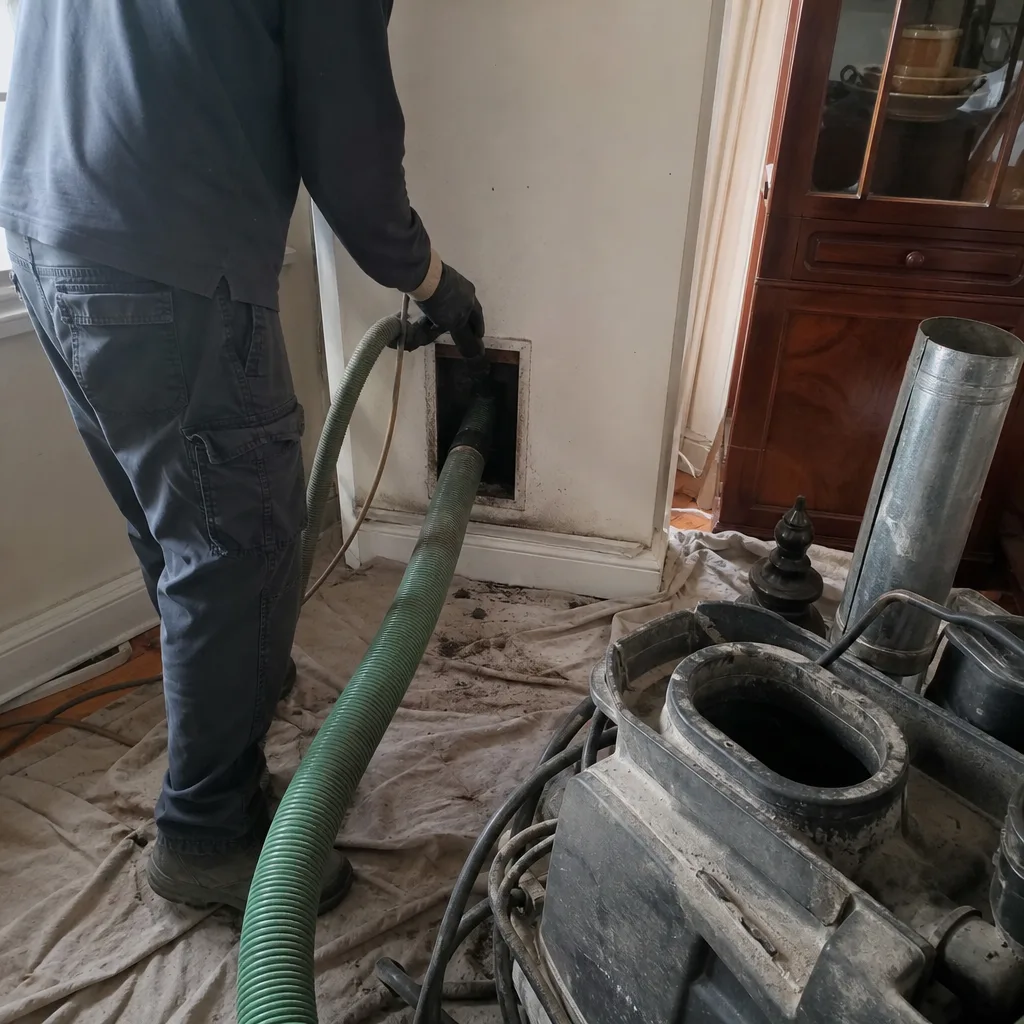 Before
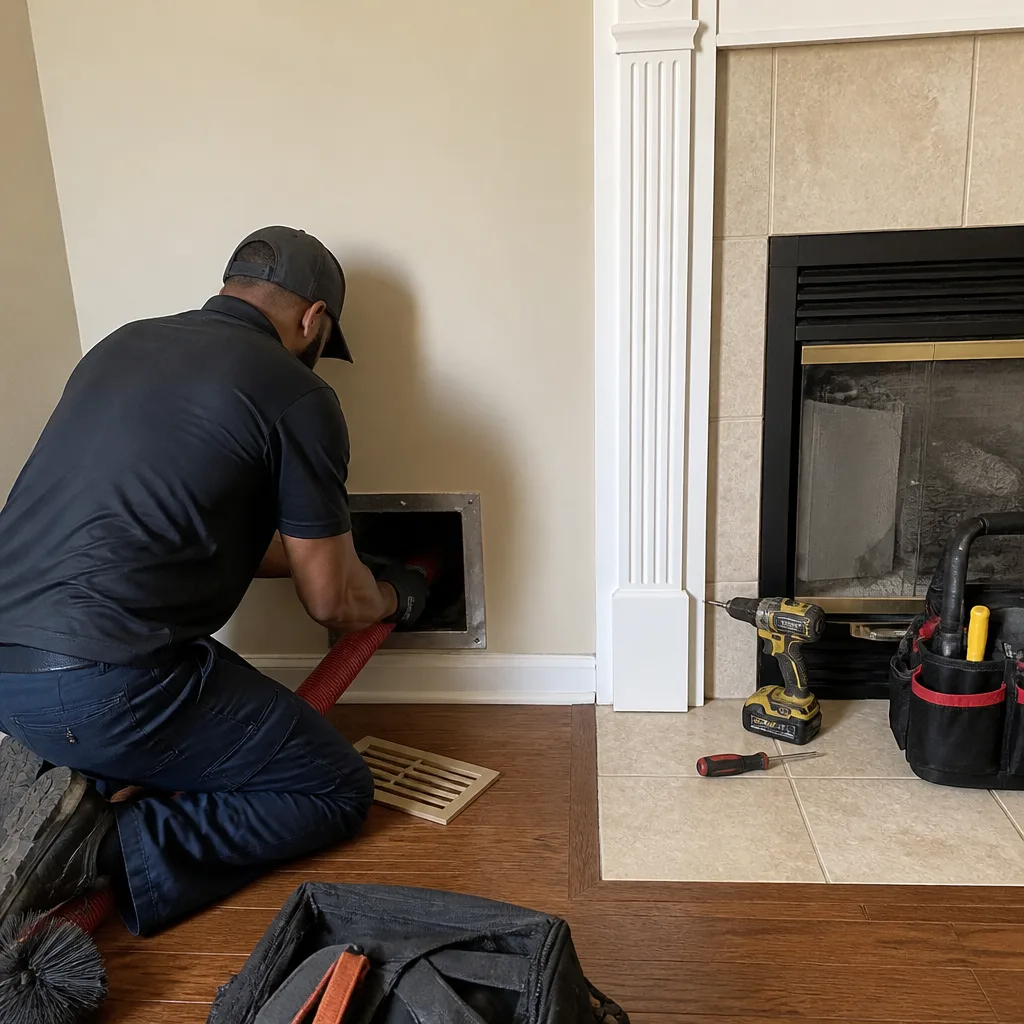 After
After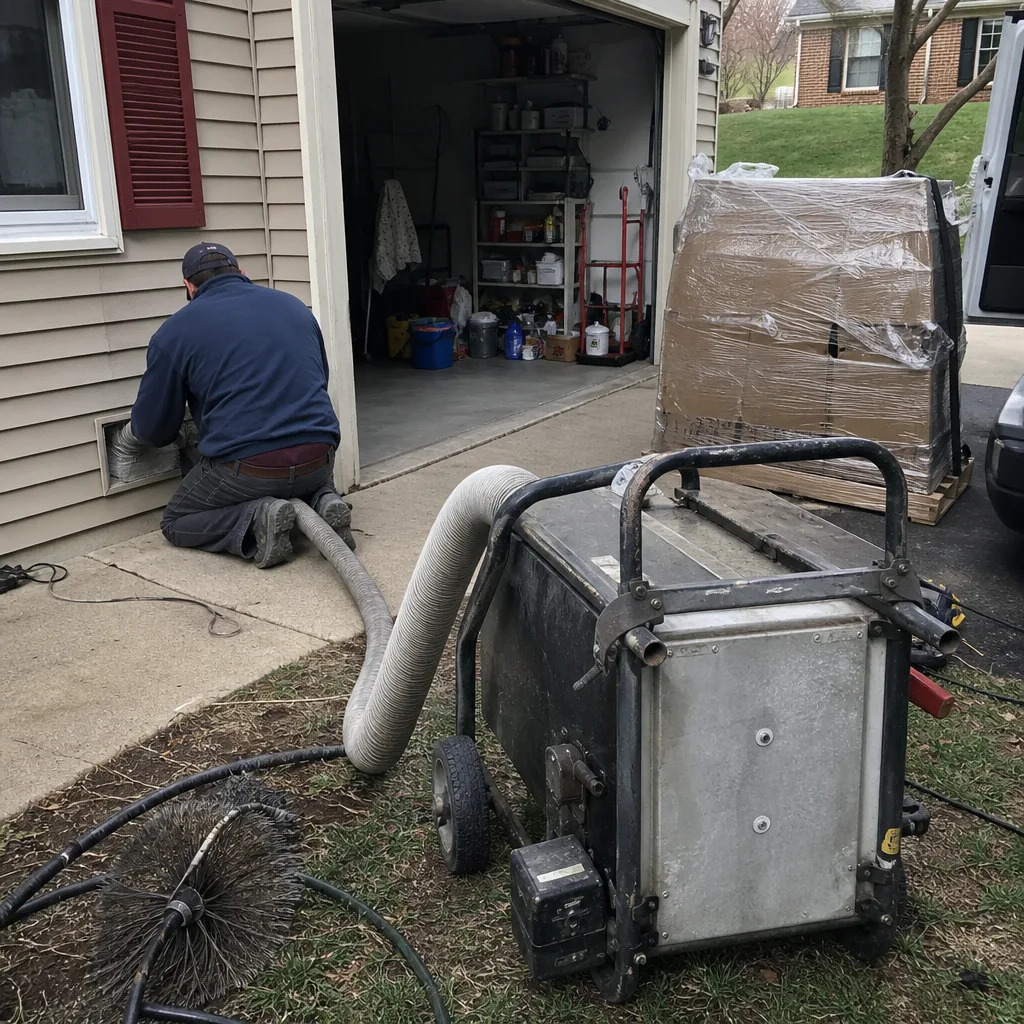 Before
 After
AfterAir Duct Cleaning Maintenance Checklist for Herndon Homeowners
The standard advice you’ll find everywhere - change your filter every 90 days, clean your ducts every 3 to 5 years - is technically correct and practically useless. It tells you nothing about whether the system in your specific Herndon home needs attention right now, or can wait another 18 months. In our experience, two homes on the same street, built in the same year, can have duct conditions that look nothing alike. One has a clean plenum (the main distribution box) and a single clogged return; the other has uniform debris buildup from a remodeling project in 2019 that the current owner never knew happened. This guide gives Herndon homeowners observable, measurable checkpoints they can complete without tools, plus the specific visual thresholds that mean “call this week” versus “check again in six months.” For more on when professional help is needed, see our Air Duct Cleaning Warning Signs: A Herndon Homeowner’s Reference Guide.
Quick Answer
A complete air duct maintenance checklist for Herndon homeowners includes monthly filter checks, quarterly register inspections, seasonal humidity-specific tasks for Virginia’s climate, and annual photography of three key system points. Most homeowners can complete the full routine in under 45 minutes. Professional Air Duct Cleaning services become necessary when visible debris exceeds 1/4 inch at any register, mold appears, or airflow drops measurably at distant vents.
Table of Contents
- Why Herndon Homes Need a Specific Checklist
- The Room-by-Room Visual Checklist
- Filter Specification: What MERV Actually Means
- Seasonal Maintenance: Herndon’s Two Distinct Windows
- The Three Smartphone Photos That Save Diagnostic Time
- When Checklist Findings Cross the Line
- Common Mistakes to Avoid
- When to Call a Professional
- Frequently Asked Questions
- The Bottom Line
BeforeAfterWhy Herndon Homes Need a Specific Checklist
Herndon sits in Fairfax County’s transition zone between the Piedmont and the coastal plain, which creates a specific set of conditions for residential HVAC systems. Summer humidity regularly pushes 75% from June through September, while winter heating season pulls that same air through ducts at much lower relative humidity, accelerating the drying and flaking of any accumulated organic material. Homes built during the 2015-2020 construction surge in neighborhoods like Woodland Park, McNair Farms, and the Metro Station area often share duct designs that prioritized cost over accessibility, meaning the average homeowner can’t easily inspect the full system without knowing exactly where to look.
The other factor is age distribution. Herndon’s housing stock includes 1970s split-levels in older neighborhoods, 1990s colonials near the Dulles Technology Corridor, and dense townhome developments from the last decade. Each era used different duct materials: galvanized steel with fiberglass lining in older homes, flex duct in many 90s builds, and a mix in newer construction. The maintenance checklist that works for a 1985 rancher with rigid metal ducts will miss critical points in a 2018 townhome with extensive flex runs.
What this means practically: a generic “check your vents” instruction fails because it doesn’t specify which vents matter most in your duct configuration, or what you’re actually looking for given your home’s materials and age. The checklist below is organized by what you can observe, not by what a technician would find with a borescope camera.
The Room-by-Room Visual Checklist
This checklist requires no tools beyond a flashlight and a smartphone. Complete it twice yearly, ideally in late March and late September, before the heavy cooling and heating seasons begin.
At Every Supply Register
- Remove the register and photograph the duct opening. You’re looking for visible debris accumulation on the duct walls, not just at the lip. A thin coating of dust is normal. A ridge or ring of debris more than 1/4 inch thick, or any visible mold staining (typically gray, black, or green), crosses the line to “schedule professional inspection.”
- Check for register damage or poor fit. Registers that don’t seat properly, are bent, or have missing screws allow unfiltered air to bypass your return system. In Herndon homes with basement ductwork, this is common where registers have been removed and replaced during flooring changes.
- Note airflow strength subjectively. Hold a tissue 6 inches below the register with the system running. The tissue should lift and hold horizontally. If it barely moves or falls immediately, mark this room for the annual comparison step.
At Every Return Vent
- Remove the grille and inspect the filter frame or media cabinet. In many Herndon homes, especially townhomes built after 2015, the return path includes a filter slot at the grille rather than at the air handler. Check that the filter is seated fully, with no bypass gaps. A filter that’s too small for its slot is worse than no filter at all - it creates turbulent airflow that deposits debris on the frame and duct walls.
- Photograph the return duct opening. Returns typically show heavier debris than supplies because they’re pulling air in. A light coating is expected. Clumps, hair accumulation, or visible insect debris indicate the filter has been missing, damaged, or incorrectly installed for some period.
- Check the grille louvers for dust buildup. Heavy accumulation on the grille itself, as opposed to inside the duct, usually means the filter is overloaded or missing.
At the Air Handler Cabinet
This is typically in a basement, utility closet, or attic. In Herndon, basement locations are most common in pre-2000 homes; attic installations appear frequently in newer construction and townhomes.
- Inspect the filter at the air handler. Even if you have return filters, most systems have a final filter at the unit. Note the size printed on the frame, the MERV rating, and the installation direction (arrow should point toward the blower motor).
- Look for moisture or rust on the cabinet floor. Any standing water, rust streaks, or white mineral deposits indicate condensate drainage problems. In Herndon’s humid summers, this is the most common precursor to mold in the plenum.
- Photograph the coil area if visible. Through the access panel, the evaporator coil should appear finned and relatively clean. Heavy fuzz or matting reduces airflow across the entire system.
Key Takeaways for the Room-by-Room Check
- Photograph the same three points each time: worst supply register, worst return vent, and air handler filter area.
- Compare photos year over year - gradual change is normal; sudden worsening indicates a new source.
- Mark rooms with weak airflow for professional evaluation if the pattern persists after filter replacement.
Filter Specification: What MERV Actually Means
MERV stands for Minimum Efficiency Reporting Value, and it’s where most homeowners make a well-intentioned error that damages their system. The scale runs from 1 to 20, with higher numbers filtering smaller particles. The common assumption - that higher is always better - creates real problems in residential ductwork.
Here’s what MERV ratings actually restrict:
- MERV 1-4: Pollen, dust mites, carpet fibers. Basic fiberglass panels. Inexpensive but minimal protection.
- MERV 5-8: Mold spores, pet dander, aerosol droplets. Standard pleated filters. Appropriate for most Herndon homes with standard 1-inch filter slots.
- MERV 9-12: Fine dust, lead dust, auto emissions. High-efficiency pleated filters. Requires verification that your blower motor can handle the pressure drop.
- MERV 13-16: Bacteria, tobacco smoke, sneeze nuclei. Often marketed as “allergy” or “hospital-grade.” Significant pressure restriction; many residential systems cannot maintain rated airflow with these installed.
- MERV 17-20: HEPA-level filtration. Requires specialized cabinet and blower. Not suitable for standard residential ductwork without modification.
The critical point for Herndon homeowners: your system’s blower motor was specified for a certain pressure drop across the filter. Adding a MERV 13 filter to a system designed for MERV 8 reduces airflow, increases energy consumption, and can cause the evaporator coil to freeze in summer or the heat exchanger to overheat in winter. We’ve documented this exact scenario in homes near Herndon Parkway and Elden Street, where homeowners upgraded filters during allergy season and experienced reduced comfort without understanding why.
The correct approach: check your system’s documentation for the maximum recommended MERV, or inspect the existing filter and match that specification. If you want better filtration than your system supports, the solution is a whole-house air cleaner with its own fan, such as units from Honeywell or Aprilaire, not a higher-MERV insert filter. These install in parallel with your ductwork and don’t restrict system airflow.
Replacement frequency in Herndon: during high-pollen spring months (April-May) and heavy cooling season (July-August), check monthly. The combination of oak and maple pollen in Fairfax County, plus summer humidity that causes filters to load faster, means the 90-day rule is a maximum, not a target.
Seasonal Maintenance: Herndon’s Two Distinct Windows
Herndon’s climate creates two maintenance periods with different priorities. The humidity swing between summer and winter isn’t just a comfort issue; it changes what happens inside your ducts.
Spring/Summer Window (April-September)
High humidity means condensation risk at any cold surface. In ducts, this occurs where supply air passes through unconditioned spaces - attics in townhomes, crawl spaces in older homes, garage ceilings in split-levels. The maintenance priority is moisture detection.
- Run the checklist with particular attention to the air handler cabinet. Any moisture, rust, or mineral deposits indicate condensate drainage problems that will worsen as humidity climbs.
- Check the condensate drain line for flow. In basement installations, this is typically a PVC pipe terminating near a floor drain or pump. A dry line in July is as concerning as a clogged one - it may mean the drain is blocked and water is accumulating in the pan.
- Photograph the evaporator coil area if accessible. Summer is when biological growth accelerates, and early detection prevents the musty odors that peak in August.
In our work across Herndon, particularly in the Dranesville area and near the W&OD Trail, we’ve found that homes with basement air handlers and summer dehumidifier use show consistently cleaner ducts than those relying solely on the AC’s latent capacity. The dehumidifier reduces the total moisture load, which means less condensation at duct seams and less organic material to support mold growth.
Fall/Winter Window (October-March)
Dry forced-air heating changes the problem. Low humidity causes accumulated debris to dry and flake, increasing airborne particulates. It also creates static electricity that attracts dust to duct surfaces. The maintenance priority is source control and filtration.
- Replace filters before the first sustained heating period, typically mid-October in Herndon. A filter that loaded during summer will restrict airflow more severely in heating mode because heated air is less dense and moves with less force.
- Inspect the heat exchanger area if visible through the access panel. Look for soot, rust flakes, or any deformation of the metal. These indicate combustion problems that require immediate professional attention.
- Check humidifier components if your system includes one. Aprilaire and Honeywell whole-house humidifiers are common in Herndon homes built after 2010. The water panel should be replaced annually, and the distribution tray checked for mineral scaling from Fairfax County’s moderately hard water.
The winter checklist also includes a specific Herndon consideration: homes near construction zones, particularly in developing areas like the Innovation Station Metro vicinity, experience higher dust loading during heating season. The combination of dry air and fine particulates from nearby earthwork means filters load faster and duct surfaces accumulate debris more quickly. If you’re within a quarter-mile of active construction, check filters monthly from November through February.
The Three Smartphone Photos That Save Diagnostic Time
When you do call a technician, the photos you’ve taken during routine maintenance provide concrete information that phone descriptions cannot. We’ve seen diagnostic time cut by 30 minutes or more when homeowners send these three images before the visit.
Photo 1: The Worst Supply Register
Choose the register with the most visible debris, not the one that’s easiest to access. Remove the register and photograph straight into the duct. Include the duct wall and the first elbow or turn if visible. This tells us the material (galvanized steel, flex, or fiberglass-lined), the debris type (dust, construction residue, or biological), and the approximate depth of accumulation. A clear photo eliminates the “it was pretty dirty” ambiguity that wastes the first 15 minutes of every service call.
Photo 2: The Return Filter and Frame
Photograph the filter in its frame, showing the full perimeter. We need to see gaps, bypass paths, and whether the filter is seated correctly. Include the size marking and MERV rating in the frame. This single photo often reveals why debris is accumulating faster than expected - a 16×25 filter crammed into a 16×24 slot, or a filter installed backwards so the structural mesh faces upstream and catches nothing.
Photo 3: The Air Handler Filter and Cabinet Interior
With the filter removed, photograph the filter slot and the downstream side of the cabinet. Show any rust, moisture staining, or debris bypass. If the evaporator coil is visible, include it. This photo reveals system-level problems - leaks in the return plenum, filter bypass due to poor cabinet design, or coil conditions that affect the entire duct system.
Send these to CleanRun Air Duct Cleaning Herndon home service scheduling, or to any technician you call. The specificity matters. “My ducts are dirty” tells us almost nothing. A photo showing 3/8-inch debris buildup at the second elbow of a flex duct run tells us the cleaning scope, the equipment needed, and whether the run can be cleaned effectively or needs replacement.
When Checklist Findings Cross the Line
The purpose of maintenance is to catch problems before they require emergency response. These are the specific visual thresholds that move a finding from “monitor” to “schedule within the week.”
| Finding | Monitor | Schedule This Week |
|---|---|---|
| Supply register debris | Thin, uniform coating; wipes clean with damp cloth | Ridge or ring exceeding 1/4 inch; any mold staining; insect debris |
| Return vent condition | Light dust; normal hair accumulation | Clumped debris; filter missing or damaged; visible moisture |
| Air handler cabinet | Minor dust on surfaces | Standing water; rust streaks; coil frosting or heavy matting |
| Airflow at register | Slightly reduced in one room; improves with filter change | Multiple rooms affected; no improvement after filter change; whistling or new noise |
| Filter condition | Gray, loaded evenly; replaced within 90 days | Collapsed; wet; mold-stained; or loaded in less than 30 days repeatedly |
A specific Herndon consideration: the combination of summer humidity and winter heating in our climate means mold findings at registers are more likely to be active growth than dormant staining. If you see discoloration that wipes off and leaves a residue, or that returns within two weeks of cleaning, that’s active growth requiring professional remediation, not just duct cleaning. The H.A.V.E.N. Standard includes specific protocols for this distinction - Haven Standard Clause 2: Scope Verification - which requires photographic documentation before any work begins to confirm that cleaning is the appropriate response. For details on local requirements, read our post on Air Duct Cleaning Permits, Codes & Inspections in VA: What You Need to Know.
Common Mistakes to Avoid
- Buying the highest MERV filter available. MERV 13 filters in systems rated for MERV 8 reduce airflow, increase energy costs, and can damage the blower motor. Match the specification, don’t exceed it.
- Cleaning registers with water and closing them immediately. Moisture trapped in a closed register in Herndon’s humid summer creates ideal conditions for mold. If you damp-wipe registers, leave them open until fully dry.
- Ignoring returns because “they’re just pulling air in.” Returns typically have heavier debris loading than supplies, and they’re where most homeowners find missing or incorrectly installed filters.
- Assuming new construction means clean ducts. Homes built during the 2015-2020 surge in Herndon often have significant construction debris in ducts - drywall dust, wood particles, and insulation fragments - that was never cleaned before occupancy.
- Using “duct cleaning” attachments on household vacuums. These lack the negative-pressure extraction capability of professional equipment from Abatement Technologies or Guardsman, and can damage flex duct or push debris deeper into the system.
- Waiting for a smell before inspecting. Musty odors indicate established biological growth. The checklist is designed to catch conditions before they produce odor.
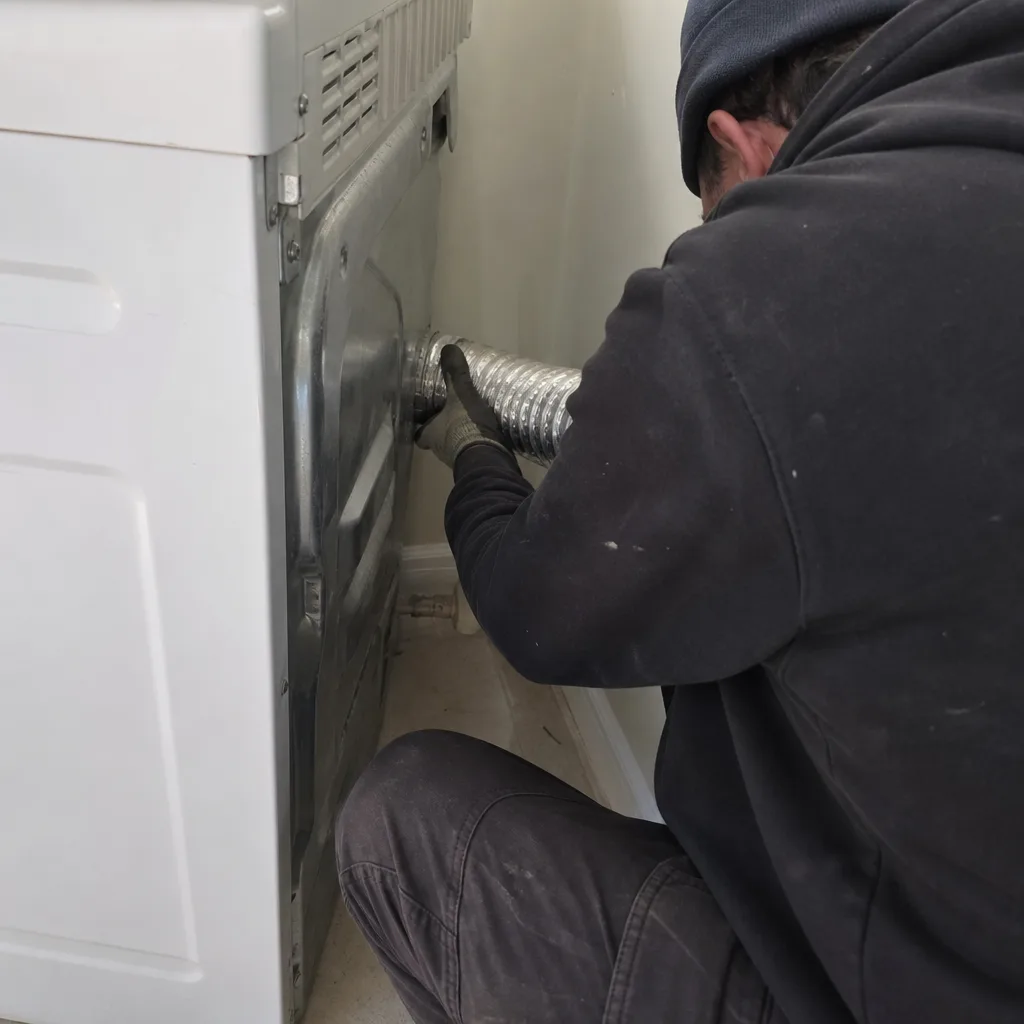
- Neglecting the dryer vent while focusing on HVAC ducts. The dryer vent is part of the same airflow system in many Herndon homes, and lint accumulation creates fire risk and back-pressure that affects overall home ventilation. Dryer Vent Cleaning in Herndon should be part of a complete maintenance approach.
When to Call a Professional
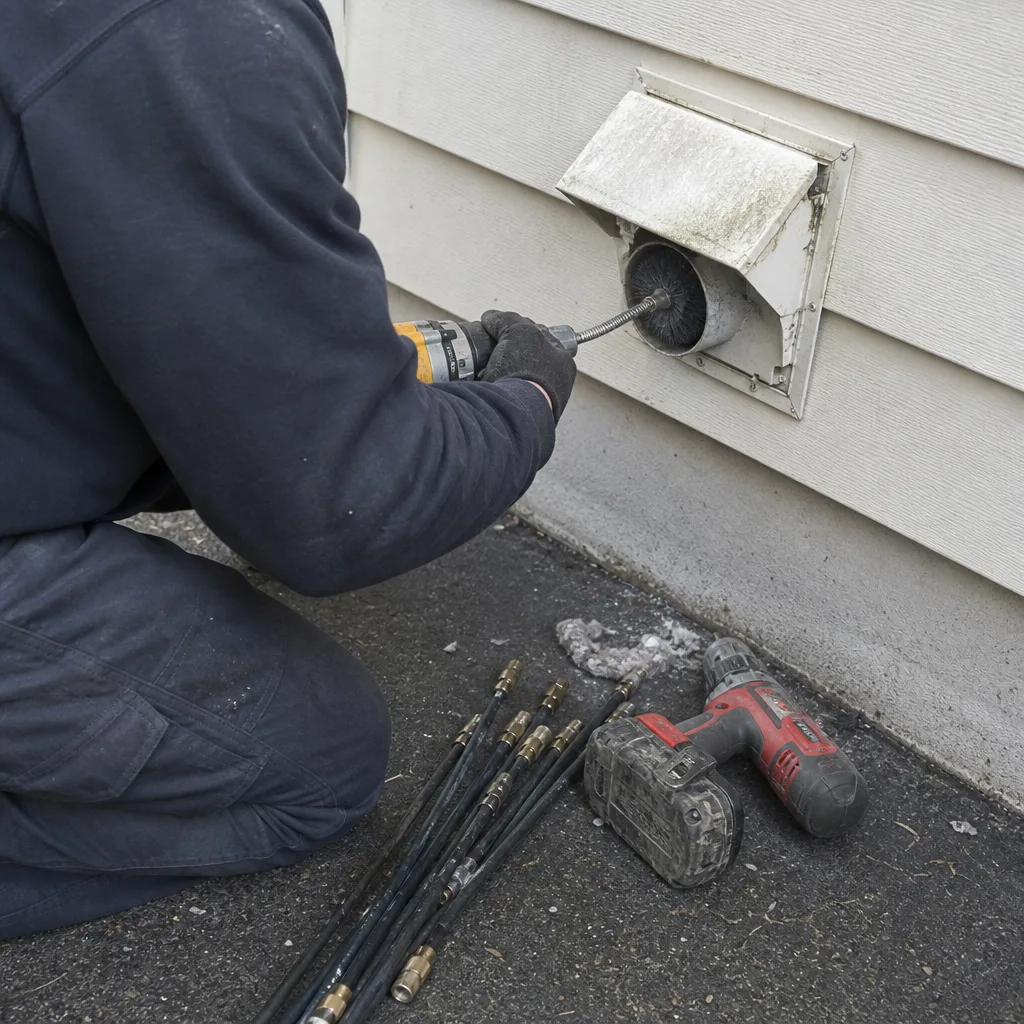
Schedule professional evaluation when your checklist reveals any “schedule this week” threshold, when you cannot access key inspection points safely (attic air handlers in summer heat, for example), or when you need documentation for a home sale or warranty claim. Professional Air Duct Cleaning in Herndon should include a written scope and price before work begins, photographic documentation of every duct run, and equipment that can be verified by manufacturer name.
CleanRun Air Duct Cleaning Herndon offers free estimates in Herndon - call (571) 520-6317. Every estimate includes a written price under Haven Standard Clause 1, and every completed job includes a Documented Photo Record of every duct run, before and after. We’ve served 52,000+ homes since 2013, every one with the same written-price, photo-documented standard.
Frequently Asked Questions
Whole-system air duct cleaning in Herndon typically ranges from $450 to $850 for a standard single-family home, depending on duct configuration, accessibility, and whether dryer vent or HVAC Cleaning in Herndon is included. Townhomes and homes with basement air handlers tend toward the lower end; homes with attic installations, extensive flex duct, or multiple zones trend higher. CleanRun provides a written price before any work begins - no exceptions - under Haven Standard Clause 1. Call (571) 520-6317 for a specific quote; estimates are free.
Most Herndon homes benefit from professional cleaning every 3 to 5 years, but the maintenance checklist above determines your actual interval. Homes with pets, recent construction, or occupants with respiratory sensitivities may need cleaning every 2 to 3 years. Homes with excellent filtration, consistent maintenance, and no contributing factors may extend to 5 to 7 years. The checklist photos, compared year over year, give you objective data rather than a calendar rule.
Low quotes typically reflect limited scope - a shop vacuum at registers rather than negative-pressure extraction through the full system - or introductory pricing designed to sell additional services once the technician arrives. The $79 coupon model is well-documented in consumer protection complaints: the advertised price covers minimal work, and the final invoice arrives after “discovered” problems. A legitimate quote specifies the number of duct runs, the equipment to be used (Rotobrush, Nikro, or Abatement Technologies systems, for example), and whether before-and-after documentation is included. CleanRun’s written price covers the full agreed scope; no additional charges are added after work begins.
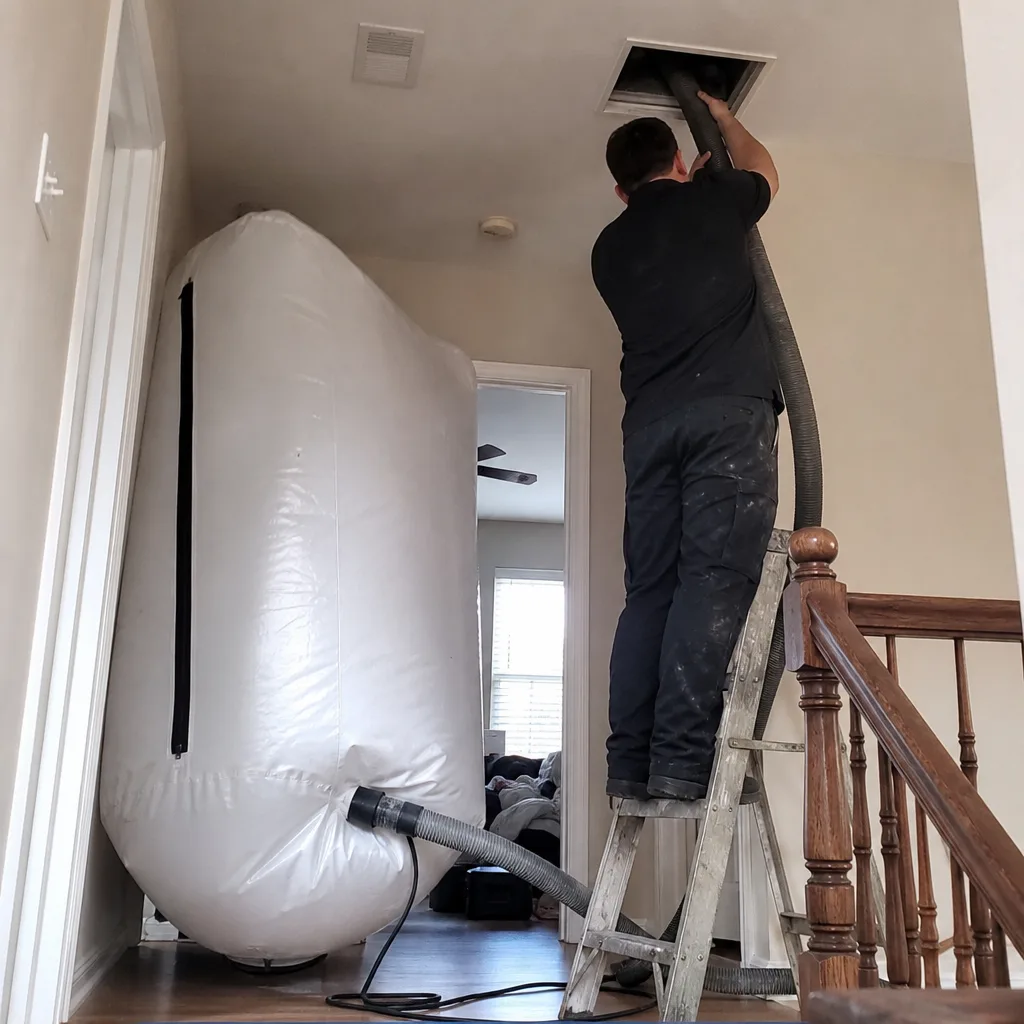
Request photographic documentation of every duct run, before and after. Professional equipment from manufacturers like Abatement Technologies and Guardsman includes camera systems that record the interior condition. CleanRun includes this Documented Photo Record as a standard deliverable on every job - not as an upgrade or add-on. If a company cannot or will not provide dated, labeled photos of your specific ducts, you have no verification that the work occurred as described.
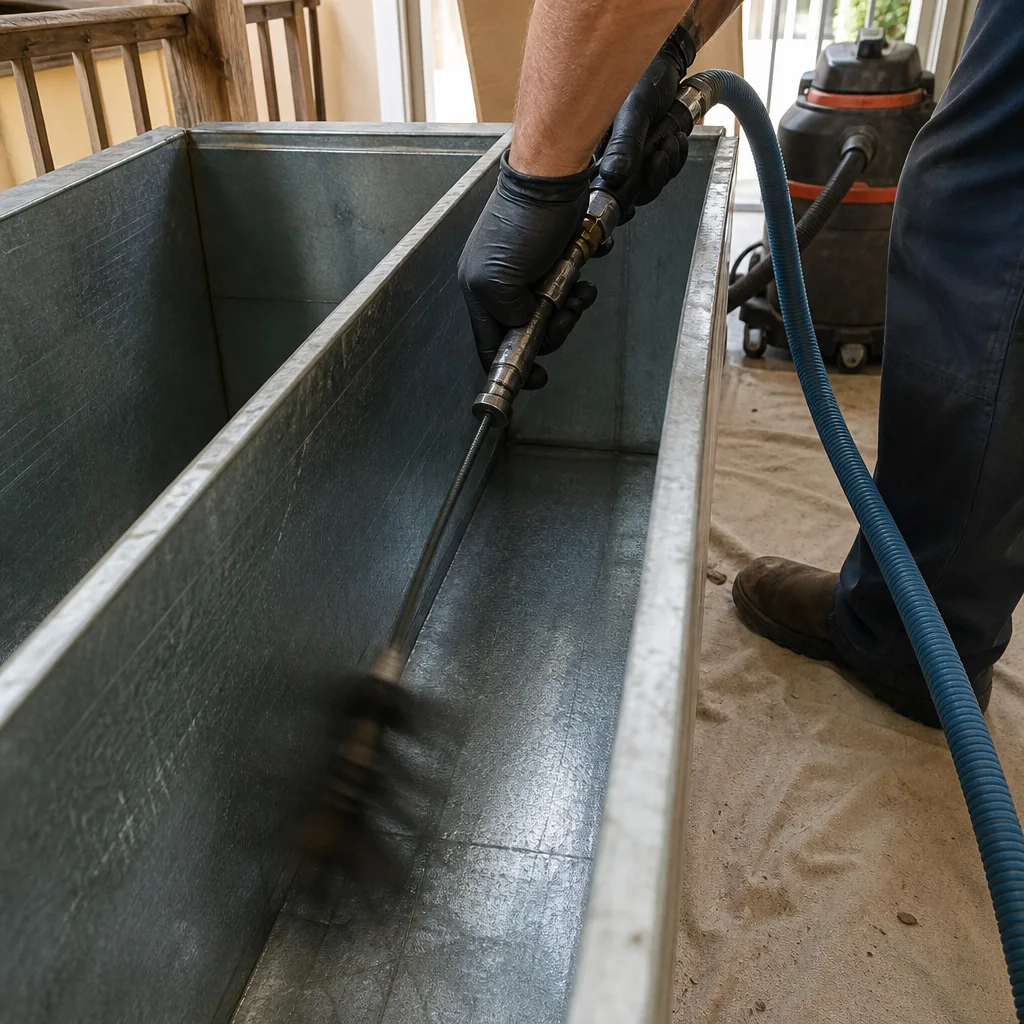
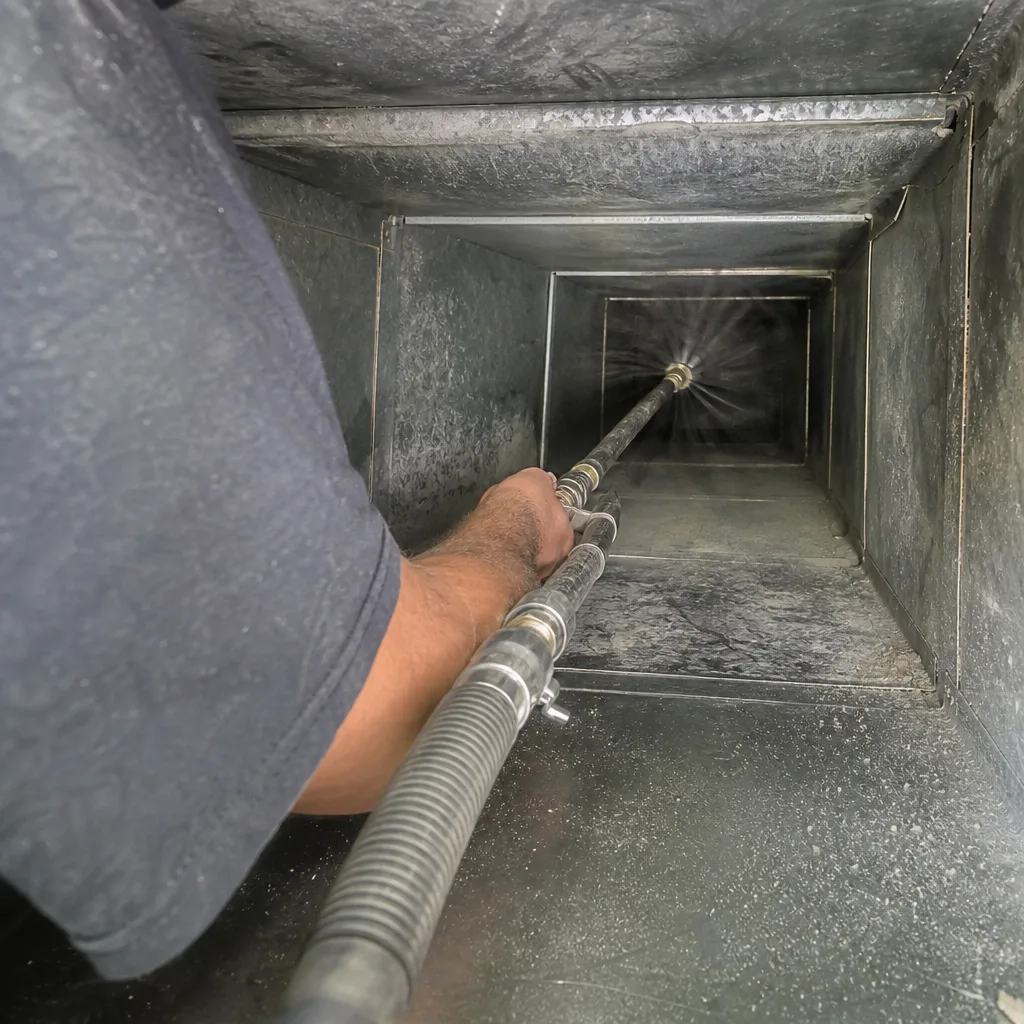
Homeowners can and should perform the maintenance checklist in this guide. However, full-system cleaning requires negative-pressure extraction equipment that maintains controlled airflow to prevent debris release into living spaces, plus access tools for duct runs beyond the first few feet. Attempting to clean deep ductwork with household equipment risks damaging flex duct, pushing debris into inaccessible areas, or creating indoor air quality problems. For safety and effectiveness, professional cleaning is recommended when the checklist indicates it’s needed.
Fairfax County’s moderately hard water affects humidifier maintenance and condensate drainage, not the ducts directly. Mineral scaling in humidifier water panels and condensate drain lines is the primary concern. Annual replacement of humidifier panels and periodic flushing of drain lines prevents the blockages that lead to cabinet moisture and, eventually, duct contamination. This is particularly relevant for homes near the Sugarland Run watershed, where water hardness runs slightly higher than county average.
Air duct cleaning addresses the supply and return ductwork, registers, and grilles. HVAC Cleaning in Herndon adds the air handler components: evaporator coil, blower motor and wheel, heat exchanger, and condensate system. The two services are related but distinct. Duct cleaning without HVAC component cleaning leaves the source of contamination intact; HVAC cleaning without duct cleaning addresses only part of the airflow path. For homes with significant accumulation or system performance issues, both are typically recommended.
The Bottom Line
A useful air duct maintenance checklist gives you observable, measurable checkpoints, not calendar reminders. For Herndon homeowners, that means understanding how our specific climate affects duct conditions, knowing what MERV rating your system can actually handle, and photographing three key points twice yearly to track change over time. The threshold table tells you when to act. The common mistakes section tells you what not to do. And when professional service is needed, the standard is written: written price before work, documented photo record after, and equipment you can verify by name. That’s the standard CleanRun has applied since 2013, across 52,000 homes, with no exceptions.
Call (571) 520-6317 for a free estimate. We’ll put the scope and price in writing before any work begins, and you’ll receive a Documented Photo Record of every duct run when the job is complete - backed by our 365-Day Done Right Promise.
Written by Tomas Reyes, Owner at CleanRun Air Duct Cleaning Herndon, serving Herndon since 2013.